Library of Weekly Reports

Divrei Torah Rooted in Breslov Chassidut

Collected Archive of Shoemaker Reports

The Shoemaker Report is Rav Hoshea’s weekly Torah publication. Its focus is on internalizing and living Torah from the heart, not only from the head. The divrei Torah often take the parashah of the week as their point of entry and address central questions of inner avodah — including teshuvahprayer (tefillah)emunah, bitachon, and related areas of spiritual and personal refinement.

The writing assumes seriousness from the reader and speaks from within Torah life, with meaning emerging organically from honest analysis of our holy Torah and the words of Chazal, rather than from short-lived inspiration or simplified conclusions.

Yashfeh: The Stone of Binyamin

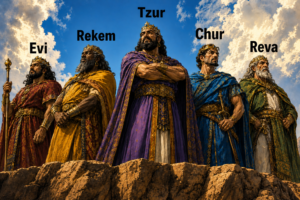
Why did Binyamin merit the Beit ha-Mikdash in his portion? This essay explores the hidden greatness of Binyamin through the stone of yashfeh, the power of silence, and his response to humiliation and suffering. Drawing from Midrash, Gemara, and Breslov teachings, it uncovers how restraint, dignity, and quiet endurance became the vessel for the revelation of the Shechinah.

Read More →

Covenant or Coincidence

What causes the curses in the Torah? Not simply sin, but a deeper collapse in the relationship between B'nei Yisrael and Hashem. Through Rashi's layered explanation of keri in Parashat Bechukotai, we trace the progression from casualness to inner resistance and spiritual numbness – and reveal why Moshe later identifies the true root as the loss of simchah in avodat Hashem.

Read More →

The Condition of Redemption

Moshe refuses to accept leadership if it comes at Aharon’s expense. From here we learn a clear condition of redemption: geulah does not come through harm to another. Just as the first redeemer would not accept his mission if it meant hurting his brother, so too Mashiach does not come through harm, but through a process that leaves others whole.

Read More →

Send Someone Else!

Moshe’s seven-day refusal was not hesitation, but a moral protest: he sensed that the geulah would first intensify suffering before resolving it. He would not accept being the agent of a redemption that deepens pain unless it reaches completion. What appears as delay is, in truth, the structure of geulah itself—revelation, resistance, concealment, and final redemption.

Read More →

R' Meir's Chiddush on the Garments of Skin

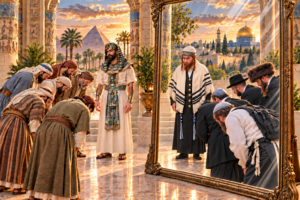
Adam ha-Rishon once lived in a state of clarity, where inner truth was visible. After the sin, that clarity was covered by a coarser outer layer. R’ Meir teaches that the original state was not lost—only hidden. What we see on the surface is not the whole story of who a person is.

Read More →

The Three Dimensions of Limud Torah

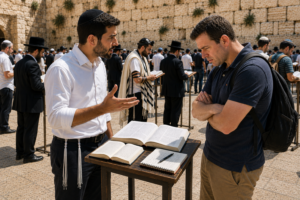
True Torah study is not defined only by what a person learns, but by how they learn. It requires a burning inner fire, intention for Hashem, and sincere inwardness that does not seek display. These three dimensions form one living avodah—a Torah that rises upward and ignites the person from within.

Read More →

The Prophet Who Thought He Was Bila'am

Moshe sees himself like Bila’am – and Bila’am sees himself like Moshe. What looks like a paradox is the secret of humility: true shiflut, to see every person as greater than you. This is how Hashem acts as well – His greatness is revealed דווקא in His turning toward the lowly. This is an avodah that redefines what greatness is.

Read More →

Just Don't Be Afraid

Most people know Rebbe Nachman’s teaching from the song Kol ha-Olam Kulo: “The whole world is a very narrow bridge.” But in Likutei Moharan Tinyana 48, the Breslov master reveals something deeper – the bridge is not the world at all, but the inner struggle of entering the service of Hashem.

Read More →

Sanctifying the Small Light Within

In the four special parashiot of Adar – Shekalim, Zachor, Parah, and ha-Chodesh – R’ Natan reveals a single spiritual arc: from uncovering hidden good, to breaking despair, to judging oneself favorably, and finally to renewal. The path from Amalek to rebirth begins with a small point of light.

Read More →

Taking Torah in the Age of the Internet

In Parashat Terumah, “וְיִקְחוּ־לִי” reveals that Torah is not information but hamshachah – drawing the Shechinah into the mind. Based on Likutei Moharan, Tinyana 60, this essay explores chiddushei Torah in the age of the internet: how online Torah can elevate a prepared vessel – or entrap an unready one – and why both teacher and listener must serve as the filter.

Read More →

Don't Read Life as Walking – Read It as Standing

At the end of Shas (Niddah 73a), Chazal overturn how we read life: not halichah – constant striving and movement – but halachah – structure, inner standing, and already-lived meaning. A ben Olam ha-Ba is not promised a future reward, but embodies Olam ha-Ba now through humility, completion, and a life that can stand on its own.

Read More →

How Yitro Heard

Why do spiritual breakthroughs so often fail to change us? Through Yitro’s hearing, kriat Yam Suf, and the battle with Amalek, this Shoemaker Report explores why intensity alone doesn’t transform — and how restraint, not inspiration, allows real emunah to take root.

Read More →