Why Mashiach Must Emerge from Moav and Ammon
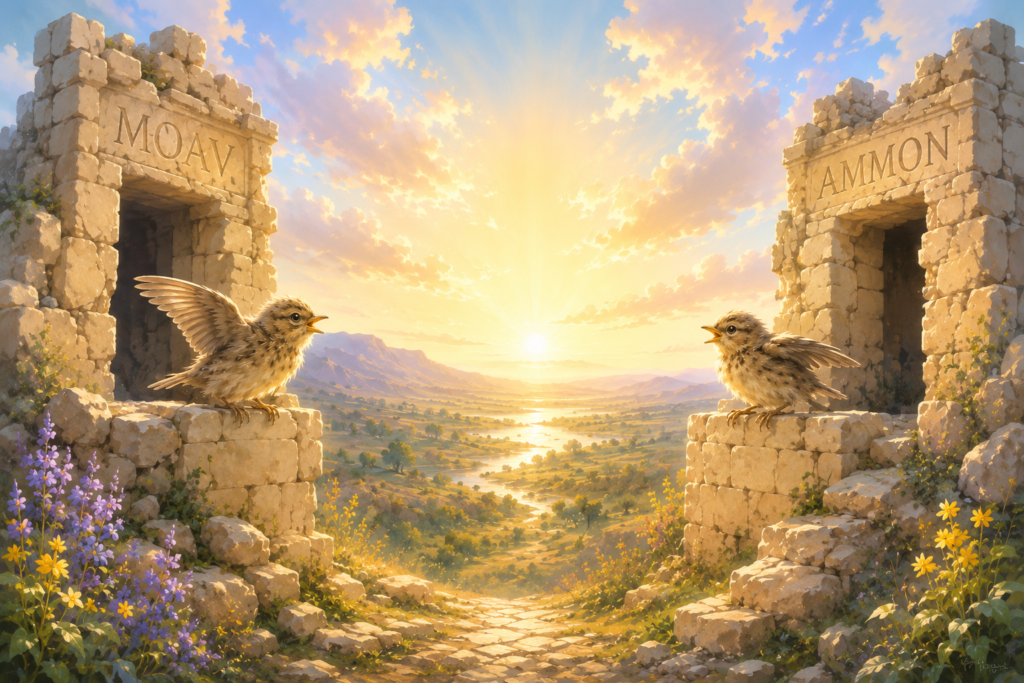
Moshe Rabbeinu had reasoned a kal va'chomer: since Hashem commanded us to go to war against the Midianites, who had come only to assist Moav, then surely He would want us to go to war against Moav itself. To forestall this line of reasoning, Hashem commanded Moshe (Devarim 2:9): אַל־תָּצַר אֶת־מוֹאָב וְאַל־תִּתְגָּר בָּם מִלְחָמָה (Do not harass Moav and do not strive against them in war). But why not? Moshe's logic made perfectly good sense. If the secondary enemy was to be destroyed, then all the more so, the primary enemy. Ulla explained Hashem's reason (Bava Kamma 38b): אָמַר לוֹ הַקָּדוֹשׁ בָּרוּךְ הוּא: לֹא כְּשֶׁעָלְתָה עַל דַּעְתְּךָ עָלְתָה עַל דַּעְתִּי, שְׁתֵּי פְּרִידוֹת טוֹבוֹת יֵשׁ לִי לְהוֹצִיא מֵהֶן – רוּת הַמּוֹאֲבִיָּה וְנַעֲמָה הָעַמּוֹנִית (Ha-Kadosh, baruch Hu, said to him [Moshe], Not as it rose in your mind did it rise in My mind. I have two good peridot – fledglings, precious offspring – to bring out from them: Rut ha-Moaviah and Na'amah ha-Ammonit).
In case you're wondering what Na'amah has to do with Moav, the answer is, she doesn't. She's included here in Ulla's teaching because Hashem also commanded Moshe not to harm Ammon (Devarim 2:19): וְקָרַבְתָּ מוּל בְּנֵי עַמּוֹן אַל־תְּצֻרֵם וְאַל־תִּתְגָּר בָּם (And when you come near, opposite B'nei Ammon, do not harass them and do not strive against them). This is why Ulla quotes Ha-Kadosh, baruch Hu as saying that He has two precious offspring לְהוֹצִיא מֵהֶן (to bring out from them), from Moav and Ammon. Rut would become the progenitor of David ha-Melech, and Na'amah would become the wife of Shlomo ha-Melech and the mother of Rechavom, through whom the Davidic dynasty would continue after Shlomo.
The question is, Why must Mashiach emerge from Moav and Ammon?
To begin to answer that question, we must first understand what Mashiach comes to accomplish. In other words, we must understand the essence of geulah.
When we think of geulah, what do we think about? No more financial problems? Lots of servants taking care of our needs? Time to learn Torah the way we always wanted? No more sickness? What exactly? But the real question is not what we think about. The question is how the Tanakh frames it. Again and again, the pesukim say the same thing – the essence of geulah is simchah.
For example, geulah is described as cosmic simchah (Divrei ha-Yamim Aleph 16:31): יִשְׂמְחוּ הַשָּׁמַיִם וְתָגֵל הָאָרֶץ (The heavens shall rejoice, and the earth shall exult). It is the joy of recognizing Hashem's salvation (Yeshayah 25:9): נָגִילָה וְנִשְׂמְחָה בִּישׁוּעָתוֹ (Let us rejoice and be happy in His salvation). And it is revealed as the force through which leaving galut becomes possible (Yeshayah 55:12): כִּי־בְשִׂמְחָה תֵצֵאוּ וּבְשָׁלוֹם תּוּבָלוּן (For with simchah you shall go out, and with peace you shall be led). Perhaps the clearest pasuk that expresses this is Yeshayah 35:10: וּפְדוּיֵי יְיָ יְשֻׁבוּן וּבָאוּ צִיּוֹן בְּרִנָּה וְשִׂמְחַת עוֹלָם עַל־רֹאשָׁם שָׂשׂוֹן וְשִׂמְחָה יַשִּׂיגוּ וְנָסוּ יָגוֹן וַאֲנָחָה (And the redeemed of Hashem shall return and come to Tzion with prayer-song, and everlasting simchah upon their heads; sasson and simchah shall overtake them, and yagon and anachah shall flee). Many more examples could be brought, but the pattern is clear: the essence of geulah is not merely escape from exile. It is the transformation of yagon [יָגוֹן, the sorrow within] and anachah [אֲנָחָה, that sorrow expressed outward in a sigh, groan, or cry] into their holy counterparts, sasson [שָׂשׂוֹן] and simchah [שִׂמְחָה].
In the words of R' Natan (Likutei Halachot, Periah u'Reviah 3:27): כִּי עִקַּר הַגְּאֻלָּה שֶׁתִּהְיֶה עַל-יְדֵי מָשִׁיחַ שֶׁיָּבוֹא בִּמְהֵרָה בְּיָמֵינוּ הוּא עַל-יְדֵי הַשִּמְחָה הַגְּדוֹלָה שֶׁיִּהְיֶה אָז … וְאָז יִתְהַפֵּךְ כָּל הַיָּגוֹן וַאֲנָחָה שֶׁהוּא בְּחִינַת מְרִירַת הַגָּלוּת יִתְהַפֵּךְ לְשִׂמְחָה (For the essence of the geulah that will come through Mashiach, may he come speedily in our days, will be through the great simchah that will exist then…and then all the yagon and anachah, which are the aspect of the bitterness of galut, will be turned into simchah). And this is why Rut and Na'amah matter. They are not incidental ancestors of Mashiach. They are the proof of the mechanism.
R' Natan explains: וְעַל-כֵּן נִמְשְׁכָה נִשְׁמַת מָשִׁיחַ עַל-יְדֵי אִתְעָרוּתָא דְּנוּקְבָּא דַּיְקָא, כַּמְבֹאָר בַּתּוֹרָה בְּעִנְיַן בְּנוֹת לוֹט שֶׁמֵּהֶם יָצְאוּ רוּת וְנַעֲמָה שֶׁמֵּהֶם יָצָא דָּוִד וּמָשִׁיחַ כַּנַּ"ל. וְכֵן בַּמַּעֲשֶׂה שֶׁל תָּמָר וִיהוּדָה … וְכֵן בַּמַּעֲשֶׂה שֶׁל רוּת וּבֹעַז, כִּי כָּל זֶה הוּא בְּחִינַת הִתְהַפְּכוּת הַיָּגוֹן וַאֲנָחָה לְשִׂמְחָה, שֶׁהוּא עִקַּר בְּחִינַת מָשִׁיחַ (And therefore, the soul of Mashiach is drawn specifically through an awakening of the female side [itaruta d'nukva], as explained in the Torah regarding the daughters of Lot, from whom came Rut and Na'amah, and from them came David and Mashiach, as mentioned above, and likewise, in the story of Tamar and Yehudah…and likewise, in the story of Rut and Boaz. For all of this is the aspect of the transformation of yagon and anachah into simchah, which is the essential aspect of Mashiach). What is R' Natan's point? Mashiach must come through itaruta d'nukva. But why?
Lot's daughters, Tamar, and Rut all acted לְשֵׁם שָׁמַיִם [l'shem shamayim, for the sake of Heaven]. R' Natan explains that when the itaruta d'nukva is directed toward bringing forth children and establishing future generations, the very place of yagon and anachah is transformed into simchah. The yearning, lack, and sorrow that could have remained trapped in emptiness instead become a vessel for kedushah. Why? Because her desire is not for herself alone, but for life, continuity, and the fulfillment of Hashem's will.
And this brings us to David, the living embodiment of this reality. Since David comes from that line, his entire life expresses the same pattern. He is hunted, rejected, endangered, and surrounded by yagon and anachah. Yet he turns everything into the most astonishing expression of simchah that the world has ever seen: Sefer Tehillim. His tears become song. His danger becomes tefillah. His near-death experiences become the famous declaration: דָּוִד מֶלֶךְ יִשְׂרָאֵל חַי וְקַיָּם (David, Melech Yisrael, is alive and enduring).
But this is not pashut. R' Natan writes: כִּי דָּוִד לֹא הָיָה לוֹ חַיִּים כְּלָל, כִּי הָיָה מִסִּטְרָא דְּנוּקְבָּא שֶׁשָּׁם אֲחִיזַת הַיָּגוֹן וַאֲנָחָה, בְּחִינַת סִטְרָא דְּמוֹתָא (For David had no life at all, because he was from the side of nukva, where yagon and anachah have their hold, the aspect of the side of death). The Zohar ha-Kadosh gives this idea startling concrete expression. When Hashem showed Adam ha-Rishon the future generations, Adam was astonished when he saw David ha-Melech (Bereshit 55a): מָטָא לְמֶחֱמֵי דָּוִד מַלְכָּא דְיִשְׂרָאֵל דְּאִתְיְילִיד וּמִית. אָמַר לֵיהּ מִשְּׁנִין דִּילִי אוֹזִיף לֵיהּ ע' שְׁנִין. וְגָרְעוּ מֵאָדָם ע' שְׁנִין וְסָלִיק לוֹן קוּדְשָׁא בְּרִיךְ הוּא לְדָוִד (He came to see David, King of Yisrael, who was born and died. He said to Him: From my own years I will lend him seventy years. And seventy years were subtracted from Adam, and Ha-Kadosh, baruch Hu, transferred them to David).
So David's entire life was, in a sense, borrowed life. He possessed no independent lifespan of his own; the seventy years he received were drawn from Adam's allotted thousand. Therefore, when we say דָּוִד מֶלֶךְ יִשְׂרָאֵל חַי וְקַיָּם, we are saying far more than a familiar refrain. We are describing David's entire avodah: to take a soul that stood at the edge of death, rooted in the place where yagon and anachah have their hold, and transform it into life, song, simchah, and malchut.
How did all of this happen? How was David able to transform yagon and anachah into sasson and simchah? R' Natan explains: וְכָל זֶה עַל-יְדֵי נְעִימַת זְמִירוֹתָיו עַל-יְדֵי רִבּוּי הַתְּפִלּוֹת וּתְחִנּוֹת וּבַקָּשׁוֹת שֶׁזָּכָה לִצְעֹק תָּמִיד אֶל ה' בְּכָל מִינֵי קוֹלוֹת וּלְשׁוֹנוֹת שֶׁל צְעָקָה וּתְפִלָּה וְתַחֲנוּנִים וְשִׁירוֹת וְתִשְׁבָּחוֹת, שֶׁזֶּהוּ כָּל סֵפֶר תְּהִלִּים, שֶׁזֶּהוּ בְּחִינַת עֲשָׂרָה מִינֵי נְגִינָה (And all of this was through the pleasantness of his songs, through the abundance of prayers, supplications, and requests with which he merited to cry out constantly to Hashem, with all kinds of voices and expressions of crying out, prayer, supplications, songs, and praises, which is the whole Sefer Tehillim, which is the aspect of the ten types of niggun). In other words, David's repair was not abstract. It took the form of voice. Every danger, tear, plea, song, and praise became part of Sefer Tehillim. And Sefer Tehillim itself is rooted in the עֲשָׂרָה מִינֵי נְגִינָה [the ten types of niggun], the holy structure of song that has the power to turn yagon and anachah into sasson and simchah. This is also the inner meaning of R' Nachman's Tikkun ha-Klali, the ten chapters of Tehillim that concentrate the power of the ten types of niggun into one tikkun. And this, in turn, is an aspect of Mashiach, through whom these ten niggunim will spread throughout the world.
To personalize this a little bit, there are places in a person's life that look like Moav: tainted beginnings, painful history, shame, confusion, things that seem spiritually compromised. The instinct is to destroy them, deny them, or assume nothing good or eternal can ever come from them. But Hashem says: "Do not be so quick. That may be exactly where your Rut is hiding." This does not mean that brokenness is justified. Moav remains Moav. The confusion remains confusion. The pain remains pain. But hidden inside that place may be a spark that cannot be extracted through denial or destruction. It can only be extracted by bringing it back to Hashem, by turning the very place of yagon and anachah into a vessel for sasson and simchah.
That is why Mashiach must come from Moav and Ammon. Not because their brokenness is ignored, but because geulah means that even the place that seemed most distant can be made to reveal Hashem's will. This is the work of Mashiach: not to deny the place of yagon and anachah, but to draw out the hidden Rut and turn sorrow itself into song.