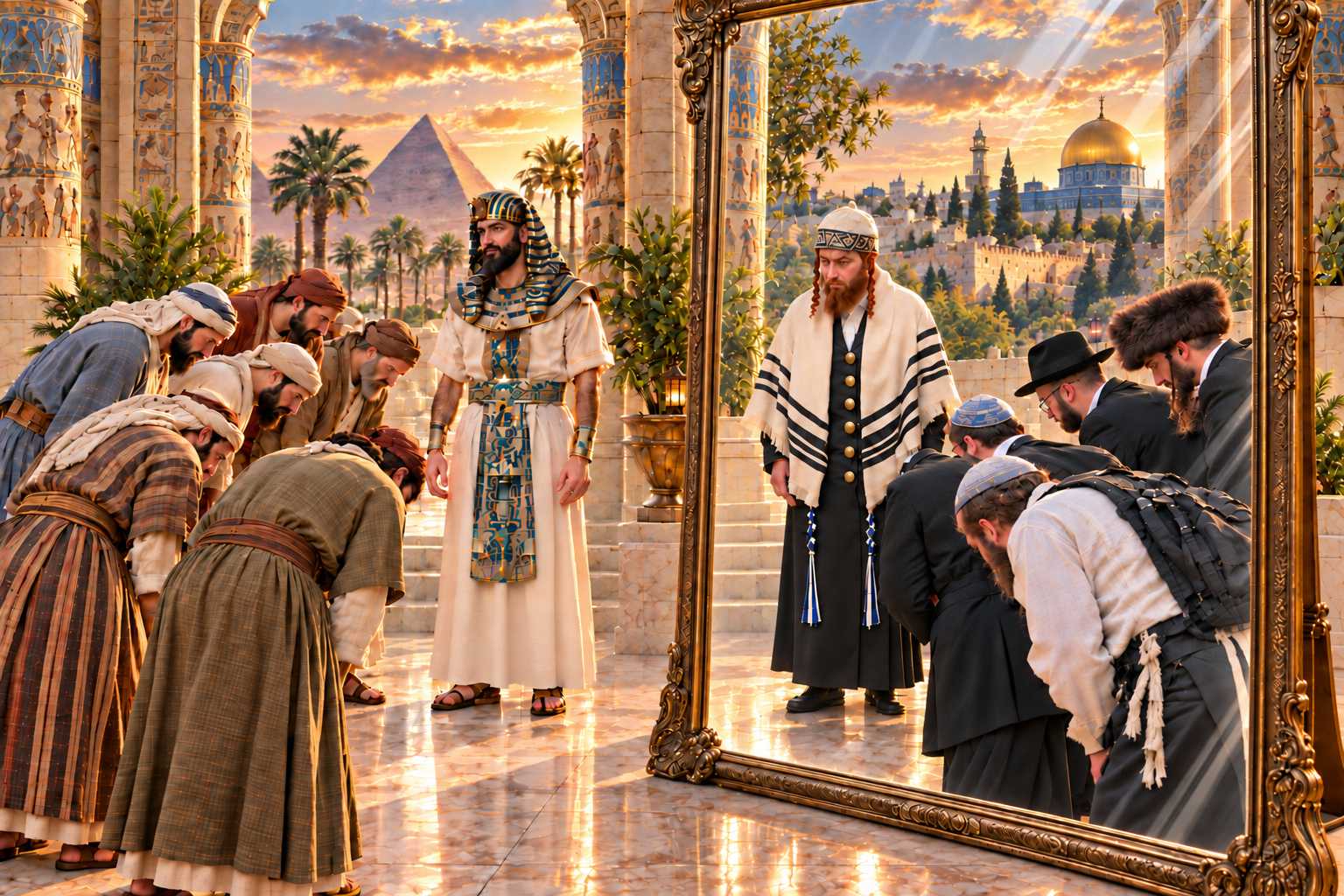

Torah for the Inner Life with Hoshea Allen

Torah is not only something to learn. It is something to live — a way of approaching the inner struggles of life with honesty, clarity, and direction.

Rooted in Breslov Chassidut, drawing on the teachings of Rebbe Nachman and the words of Chazal — this is Torah that speaks to emunahtefillah, teshuvah, and the daily work of living with truth.

If you are searching for something real — in the midst of confusion, struggle, or simply a sense that something is off — this may be a place to beginIf you want to understand more about who is behind this work, you can read more here.

Reports
0
Videos
0
Shorts
0
Prayers
0

Whispers from the Tzaddik's Heart

In a world where spiritual books often promise quick fixes and easy answers, Whispers from the Tzaddik's Heart, by Rav Hoshea Allen, is written as a companion for the soul’s real journey.

Drawing from the wellsprings of TorahTalmudKabbalah, and the transformative teachings of Rabbi Nachman of Breslov, this collection of 48 essays doesn't just teach—it awakens. Organized into nine interconnected threads, each piece builds upon the last, revealing patterns of meaning that only emerge when seen together.

Recent Reports

A Jewish man reading Likutei Halachot saying to himself, "I have to forget in order to remember? Huh?"

The Memory of Forgetfulness

Why does the Torah forbid cutting oneself or tearing out hair for the dead? Drawing on Likutei Halachot, this article explores R' Natan's paradox that true memory depends upon forgetting. It explains how Jewish mourning directs grief away from despair and toward emunah, Olam ha-Ba, resurrection, and the eternal bond between the soul and Hashem.

Read More →
A man holding dirt, symbolizing true humility

The Two Kinds of Dirt

What is the difference between true humility and the kind of humility that leaves a person discouraged, passive, and unable to act? Drawing on the Gemara, Rashi, and Breslov Torah, this article explores the two spiritual meanings of dirt: the holy humility connected to techiyat ha-meitim, tefillin, and Eretz Yisrael, and the fallen humility of sadness and laziness upon which the Serpent feeds.

Read More →

Turning Sorrow and Sighing into Simchah

The lineage of Mashiach passes through the unlikely nations of Moav and Ammon, through Rut, Na'amah, and David ha-Melech. This essay explores why geulah must emerge from such spiritually compromised beginnings, and how Sefer Tehillim, the ten types of niggun, and the avodah of David transform yagon and anachah – sorrow and sighing – into sasson, simchah, prayer, song, and new life.

Read More →

The Five Klipot of Midian

The Aderet Eliyahu reveals that the Five Kings of Midian were not merely historical enemies, but five klipot of the Sitra Achra. Evi, Rekem, Tzur, Chur, and Reva each represent a different spiritual vulnerability through which kedushah can be exploited, corrupted, hardened, or separated from life. Learn what this 'ancient history' has to do with you.

Read More →

Latest Videos