

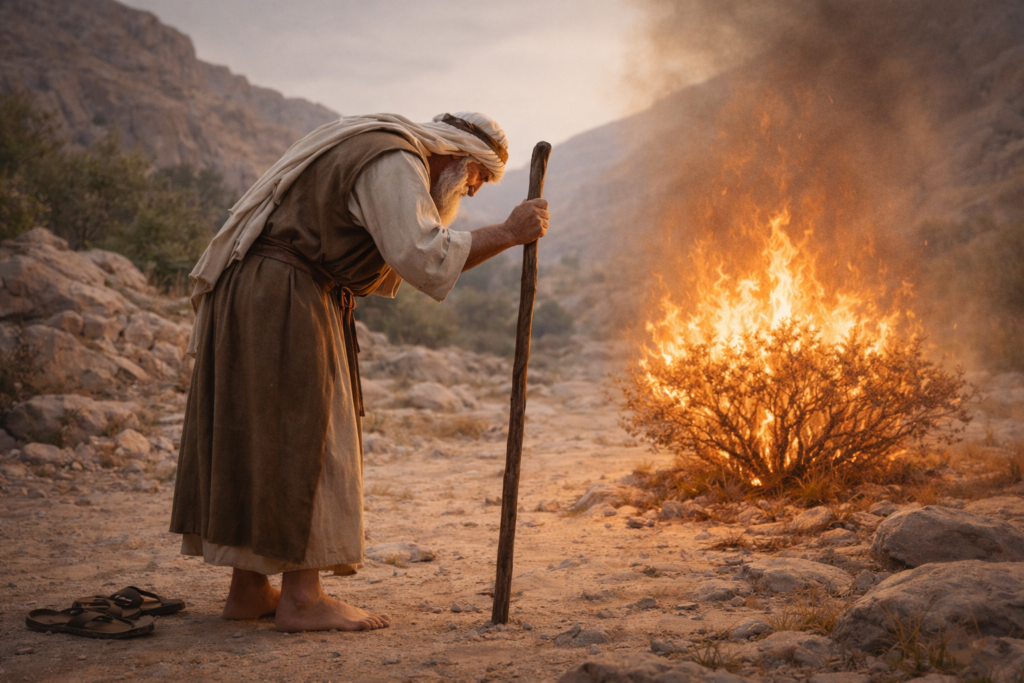
Why Moshe Rabbeinu Resisted the Geulah
The Midrash says that Pharaoh slaughtered one hundred and fifty Jewish boys every morning and another one hundred and fifty every evening, bathing twice a day in their blood in the belief that it would heal his tzara'at (Shemot Rabbah 1:34). That being the case, how could Moshe Rabbeinu have argued with Hashem for seven days, refusing to accept the mission (Shemot Rabbah 3:14)? In just those seven days alone, another two thousand one hundred Jewish boys were slaughtered! In light of what was happening in Egypt, how can we possibly justify his refusal, even for a split second?
At the end of the seven days, Moshe handed Hashem his decisive rejection of the mission (Shemot 4:13): שְׁלַח־נָא בְּיַד־תִּשְׁלָח (Please, send by the hand of whom You will send). What exactly do these words mean? Rashi, the Ramban, the Ibn Ezra, the Sforno and many others agree: Moshe was begging Hashem to send someone more fitting, more capable, or already designated (such as Aharon) because he did not see himself as the proper agent for the role. The Ramban puts it like this: שְׁלַח נָא בְּיַד כָּל אֲשֶׁר תִּשְׁלָח, כִּי אֵין אָדָם בָּעוֹלָם שֶׁלֹּא יִהְיֶה הָגוּן יוֹתֵר מִמֶּנִּי לִשְׁלִיחוּת. וְהַסִּבָּה לְמֹשֶׁה בְּכָל הַסַּרְבָנוּת הַזֹּאת, עַנְוָתוֹ הַגְּדוֹלָה מִכֹּל הָאָדָם אֲשֶׁר עַל פְּנֵי הָאֲדָמָה, שֶׁלֹּא הָיָה מוֹצֵא אֶת לִבּוֹ לְהִתְגַּדֵּל וּלְדַבֵּר אֶל הַמֶּלֶךְ וְשֶׁיִּתְפָּאֵר לֵאמֹר ה' שְׁלָחַנִי, וְלֹא עַל יִשְׂרָאֵל לְהוֹצִיאָם מִמִּצְרַיִם וְלִהְיוֹת עֲלֵיהֶם מֶלֶךְ (Please send by the hand of anyone whom You will send, for every person in the world is more fitting than I for the mission. And the reason for all this refusal on Moshe's part was his great humility, greater than that of any person on the face of the earth, for he could not bring himself to elevate himself and to speak to the king, and to glorify himself by saying, 'Hashem has sent me,' nor to stand over Yisrael to bring them out of Egypt and to be a king over them). Moshe was not openly rebelling. He was hesitating, deflecting, and resisting – but without saying so bluntly – because he truly believed that he was the worst possible choice, that any Jew would have been better qualified than he was. So although this helps to explain Moshe's motivation, it doesn't address our question. After all, motivation is not justification. Even if he felt completely unworthy, how did that permit delaying a rescue of this magnitude? With three hundred Jewish boys being slaughtered daily, how could he argue with ha-Kadosh, baruch Hu for seven days?
After Moshe returned to Egypt and confronted Pharaoh, the suffering escalated. B'nei Yisrael then accused him of making the situation worse (Shemot 5:1-21). In response, Moshe said to Hashem (Shemot 5:22): לָמָה הֲרֵעֹתָה לָעָם הַזֶּה לָמָּה זֶּה שְׁלַחְתָּנִי (Why have You brought harm upon this people? Why, then, did You send me?) The Chatam Sofer introduces a critical distinction that reframes the entire problem: משה רבינו תלה זה בחטאו, שאינו ראוי וזה למה זה שלחתני (Moshe Rabbeinu attributed this to his own sin, that he wasn't worthy, and this is the meaning of 'Why, then, did you send me?') He wasn't just attributing this disaster to himself; in doing so, he was implicating Hashem. But the Chatam Sofer pivots and says that this wasn't true at all. Although Moshe misdiagnosed the cause of the worsening, he correctly grasped the pattern of the geulah – that its initial unfolding would intensify the suffering before resolving it. The reason it got worse was inherent in the nature of geulah itself: ובאמת לא הי' נשלם כפרת עוונותם של ישראל עדיין (But in truth, the atonement of the sins of Yisrael had not yet been completed). In other words, the worsening of the situation was not because Moshe was unworthy – although that's what he thought about himself – but rather because the process of kapparah was still incomplete.
Now we begin to understand Moshe's reluctance more deeply. Reconstructing the argument, this is the essence of what he was saying: "You want to send me to redeem the people, but I sense what kind of redemption this is going to be. It will not be immediate and complete, but will unfold in stages – and those stages will first intensify the suffering. Therefore, I do not accept being the agent of this kind of geulah. What good is it to redeem the people if, in the process, the people suffer more? If the geulah must pass through a phase of increased suffering, then send someone through whom it can be complete." And that is why he said to Hashem, "Why have You brought harm upon this people? Why, then, did You send me?" That wasn't a new complaint, but the expression of his original concern. Moshe's stance was not indifferent to the suffering of the Jewish People – or the Jewish boys, in particular. On the contrary, his refusal was rooted in the concern that accepting the mission would first make the suffering worse. He was not rejecting the mission itself, but his role as the redeemer of a geulah that would unfold through escalation before its resolution.
This concern becomes even sharper in light of a third element in the Chatam Sofer's explanation that adds to the tension between Moshe Rabbeinu and Hashem: וזה נסיון גדול שנעלם הגואל ששה חדשים (And this was a great trial: that the redeemer was concealed for six months). Even after Moshe was revealed as the redeemer, and even after he began the process of geulah, he would have to go into hiding, delaying the geulah and exacerbating the suffering of the Jewish People. He was not only resisting a process that would intensify suffering, he was resisting a process that would appear to stall, leaving the people suspended in that state.
But if Moshe is correct about the pattern, then the question becomes deeper: what kind of process is geulah that it must unfold this way? The answer is that, by definition, geulah begins before the world is ready for it, and that mismatch creates resistance and pushback. Before a redeemer is sent, the system is at least stable – Jewish suffering has become normalized. Therefore, Moshe must be sent to initiate the process of geulah. But the moment he's sent, tension is created between promise and fulfillment. There is an expectation of geulah without its fulfillment. Therefore, the system pushes back. There is no other way – it is built into the nature of geulah. On the surface, it looks like failure and confusion, but it's not. The concealment of the redeemer – which accelerates the pushback – is evidence that the process is well underway and has become irreversible.
It is critical to understand what Moshe is – and is not – doing. Moshe is not choosing a path that causes suffering, nor is he using suffering as a means to bring about geulah. That would be absolutely forbidden. Rather, he is introducing the truth of geulah into the world – and the system is reacting to it. Pharaoh tightens his grip, the oppression intensifies, and the suffering increases. This is not Moshe harming the people. It is the exposure of the din already embedded within the system, which his mission forces into the open.
With that in mind, let's read the end of the Chatam Sofer's comment: וכן יהי' בימי משיח צדקינו, יהי' נעלם אחר התגלות, כדאיתא במדרש וד' יעמוד לימין הצדיקים בבי"א (And so it will be in the days of Mashiach Tzidkeinu: he'll be concealed after his revelation, as is brought in the Midrash, and Hashem will stand at the right hand of the tzaddikim, speedily, in our days, Amen). When Moshe, the first redeemer, appeared, something very specific happened: a claim was introduced into the world. The increased suffering was not random; it was the direct result of the system reacting to being challenged. The hidden opposition had to come out into the open – the full force of the din could no longer remain hidden beneath the surface, but had to be fully exposed. And the key point is that Moshe's return to Egypt created that pathway.
The Chatam Sofer extends this pattern beyond Moshe Rabbeinu himself and teaches that we should expect to see the same pattern unfold with Mashiach, our final redeemer. His revelation will neither be simple nor immediate. If Moshe's appearance in Egypt triggered the exposure of din, then how much more so will the revelation of Mashiach, the final redeemer, draw it out in its fullest and most comprehensive form. We see, therefore, that the Chatam Sofer is suggesting a structure in the process of geulah itself: initial revelation, followed by concealment, and then a final revelation. And if we have eyes to see this unfolding, we should not become discouraged. On the contrary, we should be exceedingly joyful, for it signals that the process of complete geulah has begun and will reach its completion.
Yet that very structure carries a risk. Even as Moshe was concerned, so too will Mashiach face the same concern. If he initiates the process, it must be able to run to completion. If revelation comes before the system can sustain it, then suffering may escalate without resolution, chas v'shalom. Therefore, the generation must be able to absorb the consequences of his revelation, because revelation does not only bring light – it also forces all din, all contradictions, and all distortions to the surface.
We now return to the question we began with. With three hundred Jewish boys being slaughtered daily, how could Moshe Rabbeinu hesitate, even for a moment? The answer is clear: he wasn't hesitating despite the suffering – he was hesitating because of it – and that hesitation was not a flaw, but the very expression of his responsibility. He saw that the geulah would not unfold as a simple rescue, but as a process that would first intensify the pain before resolving it. And he recoiled, not out of stubbornness, but out of love. He didn't want to be the agent of a geulah that would deepen his people's suffering unless it reached completion. And Ha-Kadosh, baruch Hu's response was not to deny that concern, but to frame it: "This is how geulah works. There is no other way." It must begin before the world is ready, pass through concealment and escalation, and draw out everything hidden before it can heal it.
The question is not whether the process will be painful – it will be. The only question is whether the generation can carry it through to its completion.

2 Responses
Maybe that's why the Perachim Nivcharim are supposed to help Mashiach kill Amalek? To point out the way? It seems people are confused about getting rid of evil before good can flourish.
Well, it does say in Tehillim 34: סוּר מֵרָע וַעֲשֵׂה־טוֹב. So the commentators typically understand from this that turning away from evil must come before doing good.