Why We Must Not Cut Ourselves for the Dead
The Torah says (Devarim 14:1): בָּנִים אַתֶּם לַייָ אֱלֹקֵיכֶם לֹא תִתְגֹּדְדוּ וְלֹא־תָשִׂימוּ קׇרְחָה בֵּין עֵינֵיכֶם לָמֵת (You are children of Hashem your G‑d. You shall not cut yourselves, and you shall not make a bald patch between your eyes for the dead). These practices may seem distant and strange to us. Why would someone injure his own flesh or tear the hair from his head after the death of a loved one? And further, it's not just that the Torah prohibits these acts, it introduces the prohibition with a declaration of identity: "You are children of Hashem your G‑d." What's the connection?
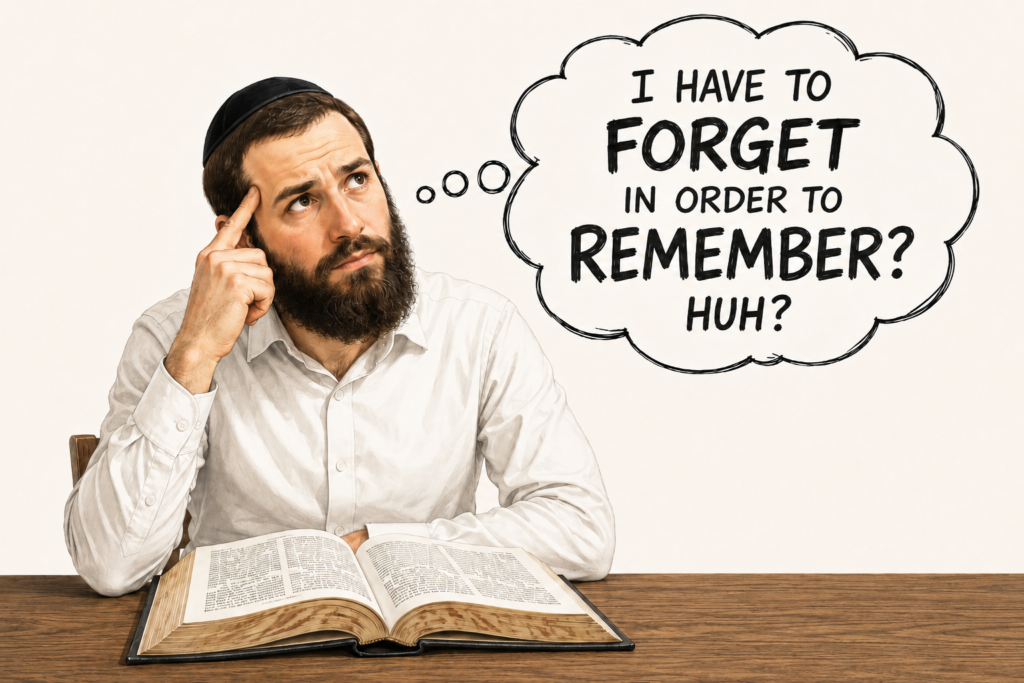
In Likutei Halachot, R' Natan explains this passage through a most powerful paradox: true memory depends upon forgetting.
He begins by identifying two opposing spiritual forces (Hilchot Korchah u'Ketovet Ka'aka 1): כִּי עָלְמָא דְּאָתֵי הוּא מְקוֹם הַחַיִּים, כַּיָּדוּעַ, הֵפֶךְ הַשִּׁכְחָה שֶׁהוּא סִטְרָא דְּמוֹתָא (For Olam ha-Ba is the place of life, as is known, the opposite of forgetfulness, which is the Side of Death [Sitra d'Mota]). Memory belongs to kedushah, life and Olam ha-Ba; forgetfulness belongs to the Sitra d'Mota, the forces that conceal Hashem and obscure the true meaning of life. The distinction seems simple enough and its conclusion self-evident – to remember Hashem, one's purpose, and Olam ha-Ba is the essence of life itself. To forget them is spiritual death. However, R' Natan introduces a profound paradox: עִקַּר שְׁלֵמוּת הַזִּכָּרוֹן הוּא עַל-יְדֵי הַשִּׁכְחָה (The primary perfection of memory is through forgetfulness). How can memory be perfected through forgetting?
R' Natan explains that not everything deserves to be preserved in the heart. There are thoughts, desires, worries and preoccupations that must be forgotten precisely because they cause us to forget what is real. A person cannot fill his mind with the passing concerns of this world and simultaneously remain attached to eternal life. He writes: הַיְנוּ לִשְׁכֹּחַ מֵהַלֵּב כָּל עִסְקֵי עוֹלָם הַזֶּה, שֶׁהֵם חוּץ מֵעָלְמָא דְּאָתֵי, דְּהַיְנוּ כָּל הַתַּאֲווֹת רָעוֹת וּמִדּוֹת רָעוֹת צָרִיךְ לְהַשְׁכִּיחַ אוֹתָם מֵהַלֵּב וְשֶׁלֹּא לִזְכֹּר אוֹתָם כְּלָל (That is, to forget from the heart all the affairs of Olam ha-Zeh that are outside Olam ha-Ba, that is, all bad desires and bad character traits must be forgotten from the heart and not remembered at all). This does not mean that we must abandon our responsibilities or walk through life in a state of detachment from reality. We must work, raise families, manage money, care for our health and deal honestly with the practical demands of life. The issue is not whether we attend to this world. The issue is whether this world occupies our heart as though it were the only world.
We may spend years remembering things we should have forgotten long ago – every insult, every disappointment, every missed opportunity, every feeling of jealousy, resentment, humiliation, etc. Not only that, but we may remember them with astonishing accuracy, remembering what someone said to us twenty years ago, verbatim; who received more respect than we did and why life did not unfold according to our plans. And if this isn't bad enough, we simultaneously drift into forgetting why we were created and Hashem's kindness to us each and every day. In short, when we remember what we ought to forget, we forget what we ought to remember.
Contrary to popular misconception, forgetfulness is not fundamentally about time. According to R' Natan, it is a corruption of memory itself. The faculty of memory comes from the place of life. It was given to us so that our minds could remain connected to Hashem and to the true purpose of our existence. When we use that power to keep worldly desires, resentments and anxieties alive, we draw the power of memory into the domain of forgetfulness and death. That is a very powerful truth. R' Natan explains this reversal: נִמְצָא, שֶׁעַל-יְדֵי-זֶה הוּא נוֹתֵן, חַס וְשָׁלוֹם, כֹּחַ וְחַיּוּת לְהַסִּטְרָא אָחֳרָא, דְּהַיְנוּ שֶׁמַּמְשִׁיךְ הַזִּכָּרוֹן, שֶׁמִּשָּׁם הַחַיִּים, אֶל הַהֵפֶךְ, חַס וְשָׁלוֹם, דְּהַיְנוּ לִמְקוֹם הַשִּׁכְחָה סִטְרָא דְּמוֹתָא (It follows that through this, chas v'shalom, he gives strength and vitality to the Sitra Achra, i.e. he draws memory, from which life comes, toward its opposite, chas v'shalom, that is, to the place of forgetfulness, Sitra d'Mota).
So we see that memory is a very powerful tool precisely because it gives life to what it focuses on. Whatever we continue to remember remains active within us. A painful incident that is repeatedly recalled remains emotionally present. A desire that is continually imagined remains alive. An old anger that is carefully preserved and caressed continues to shape our reactions years after the event itself has ended. Therefore, the issue is not whether we possess memory. The issue is what we are keeping alive through our memory. To remember what must be remembered, we must forget what should never have occupied our minds. This is what R' Natan means when he pens these astonishing words: עַל-כֵּן צְרִיכִין לִשְׁכֹּחַ אֶת הַשִּׁכְחָה (Therefore, we need to forget forgetfulness). Forgetfulness itself must be forgotten. Everything that causes a person to forget Hashem must be sent back to the realm from which it came. Since empty desires and worldly vanities come from forgetfulness, we defeat them by refusing to preserve them in our hearts.
But R' Natan also writes: וְזֶה הַזִּכָּרוֹן שֶׁל הַשִּׁכְחָה, דְּהַיְנוּ שֶׁזּוֹכֵר אֶת הַדָּבָר שֶׁצָּרִיךְ לִשְׁכֹּחַ (And this is the memory of forgetfulness, that is, that he remembers the thing that he needs to forget). So if you're reading quickly, you may find these statements contradictory. But they're not. On the one hand, R' Natan describes the corruption called 'the remembrance of forgetfulness,' in which a person remembers what he ought to forget. On the other hand, he gives the remedy: we must 'forget forgetfulness' itself. And what is that? It means precisely to stop giving memory, attention, and emotional life to the things that make us forget Hashem and Olam ha-Ba.
The truth is that the mind cannot give equal weight to everything. Every act of remembering is an act of choosing. We decide, consciously or unconsciously, which events will continue to define us, which thoughts will occupy our attention, and which concerns will receive our emotional strength. Holy forgetting means refusing to allow what is temporary, false or spiritually destructive to become permanent within us. David ha-Melech expressed a similar idea (Tehillim 45:11): שִׁכְחִי עַמֵּךְ וּבֵית אָבִיךְ (Forget your people and your father's house). In its simple context, the pasuk is addressing a bride leaving her former home. R' Natan uses it to describe the soul turning away from the habits and attachments that keep it imprisoned in the old world. There are things we must leave behind in order to enter a new life. And once we remove the false preoccupations of Olam ha-Zeh from the center of our consciousness, we can begin to develop true memory – what R' Natan frames as לְאַדְבְּקָא מַחֲשַׁבְתֵּיהּ בְּעָלְמָא דְּאָתֵי (to attach one's thoughts to Olam ha-Ba).
And so, when we remember Olam ha-Ba as we journey through Olam ha-Zeh, we understand that our choices matter – eternally. No act of kindness is lost. No tefillah is wasted. No word of Torah is just information. Every act of self-restraint, honesty, courage and emunah becomes part of our future world.
This brings us back to the laws of mourning. The Torah does not want emotional coldness. It recognizes grief and establishes laws of mourning. We sit shivah, cry, speak about the deceased, and experience the pain of separation. But the Torah also demands that mourning have its limits. Why? Because death must not be allowed to become the final answer in our consciousness. As R' Natan writes: וְעַל-כֵּן אָנוּ מְצֻוִּים שֶׁלֹּא לְהִתְקַשּׁוֹת עַל הַמֵּת יוֹתֵר מִדַּאי (Therefore, we are commanded not to grieve over the deceased excessively). Rather, we, as Jews, have a higher calling than the practices of the nations: רַק צָרִיךְ לַעֲשׂוֹת הַהֵפֶךְ מַמָּשׁ, דְּהַיְנוּ לְאַדְבְּקָא מַחֲשַׁבְתֵּיהּ בְּעָלְמָא דְּאָתֵי, שֶׁהוּא בְּחִינַת זִכָּרוֹן, שֶׁשָּׁם הַחַיִּים (Rather, one must do the exact opposite: attach his thoughts to Olam ha-Ba, which is the aspect of memory, for there is the place of life). The mourner is not told that his loved one has vanished into nothingness. He is asked to remember that the person has left temporary life and entered eternal life. We are taught, through our Holy Torah, to see death not as destruction, but as separation. Destruction, chas v'shalom, is final; separation is only temporary.
And this is why the Torah introduces the prohibitions against cutting oneself for the dead with the words, "You are children of Hashem your G‑d." A child of Hashem does not belong fundamentally to death. His life is rooted in the Infinite Life. His body may pass through death, but his existence is directed toward resurrection and eternal life. The ancient practice of making a bald patch for the dead expressed the opposite consciousness. The mourner tore out the hair and placed the sign of death upon his head. Death was given a physical memorial at the place of thought and memory. As R' Natan says about the nations who had this practice: כְּדֵי שֶׁיִּהְיֶה נִזְכָּר אֶצְלָם וְלֹא יִשְׁתַּכַּח מֵהֶם (So that the deceased would be remembered by them and not forgotten).
The issue is not that remembering a deceased person is wrong. Jewish life is filled with remembrance: observing a yahrzeit, reciting Kaddish, learning Torah l'ilui nishmat Ploni, giving tzedakah for the elevation of a soul, and so on. We even name children after those who have died and preserve their teachings and good deeds. The problem is the form of memory. The nations made the wound of death itself into the memorial. They inscribed absence, destruction and grief into the body. Their memory remained attached to the deceased specifically through the reality of death. The Torah commands a different approach: remember the person within the reality of eternal life.
The world constantly trains us to forget. It tells us that only what is visible is real, only what is immediate is important and only what is pleasurable is worth pursuing. It fills our minds with noise and then leaves no room for remembrance.
When a person remembers what he ought to forget, he forgets what he ought to remember. To remember what must be remembered, we must forget what should never have occupied our mind.