The Midrash That Changes Everything
There are parashiot we can study calmly. Vayeitzei isn't one of them. If we read this story with a human heart, it unravels us. Why? Because hidden between its lines is a heartbreak almost too painful to look at: Rachel, a young girl who waited seven years for her chuppah, standing in the shadows as her sister is led beneath it in her place. She hears the music meant for her. She watches the wedding procession that should have been hers. She sees her own future being taken from her – and she says nothing. Not a word. She hands over her entire life to spare her sister a moment of shame. There is no scream in the Torah loud enough to match the silence that came out of Rachel that night.
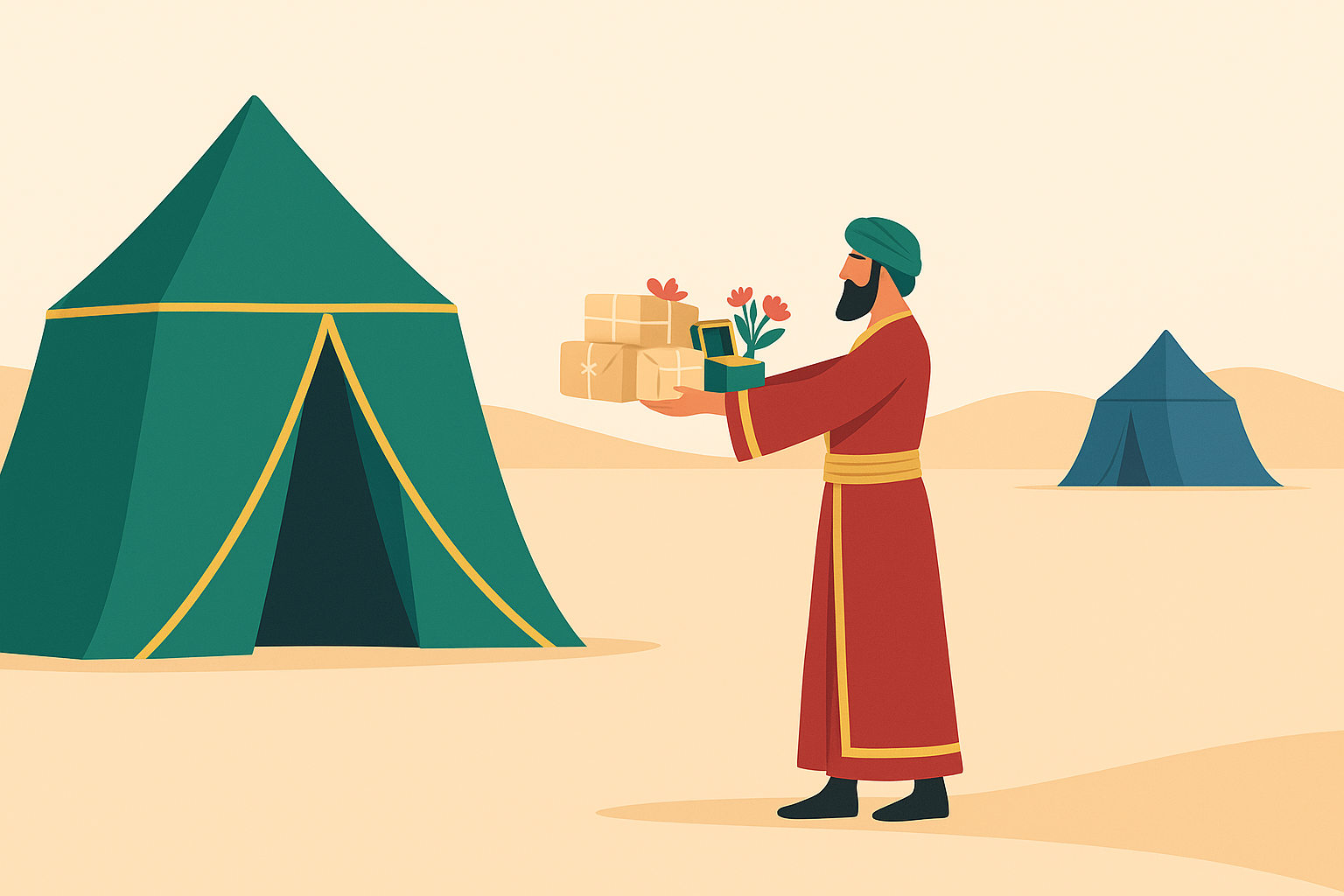
And if that weren't unbearable enough, Chazal reveal something even more inconceivable – a secret so shocking that it changes everything we thought we understood (Midrash Tanchuma, Vayeitzei 6): וְהָיָה מְשַׁלֵּחַ סִבְלוֹנוֹת לִתְּנָם לְרָחֵל וְלָבָן נוֹתְנָן לְלֵאָה וְהָיְתָה רָחֵל שׁוֹתֶקֶת (And he sent gifts to be given to Rachel, and Lavan gave them to Leah, and Rachel was silent). Rachel wasn't simply silent on the wedding night. She had been silent for seven years. Ya'akov sent gifts meant for her – signs of love, devotion, hope – and Lavan intercepted every one of them and handed them over to Leah. And Rachel watched it happen. She watched her sister receive the gifts that were meant for her, watched Leah's heart fill with the unmistakable belief that she was the intended bride. And yet, Rachel said nothing. She swallowed the confusion, the fear, the injustice – all of it – so Leah would never feel the sting of humiliation.
That midrash is the key that unlocks the parashah. Everything that follows – Rachel giving Leah the simanim, Ya'akov's response at the shock of realizing that he had unwittingly married Leah, Rachel giving Leah her night with Ya'akov in exchange for the duda'im – only makes sense once you know this single unbearable truth. Seven years of watching her sister's joy, knowing it was built on a lie she herself could have shattered at any moment – and choosing not to do so.
We must also examine the other side of this impossible moment – Leah herself. Think of what this meant to her. This is the girl who cried every day of her childhood, begging Hashem to spare her from Esav. Chazal paint the picture with brutal clarity (Bava Batra 123a): וְהָיְתָה יוֹשֶׁבֶת עַל פָּרָשַׁת דְּרָכִים וּמְשָׁאֶלֶת…וְהָיְתָה בּוֹכָה עַד שֶׁנָּשְׁרוּ רִיסֵי עֵינֶיהָ (And she would sit at the crossroads and inquire…and she would cry until her eyelashes fell out). Day after day she heard people say "גְּדוֹלָה לַגָּדוֹל וּקְטַנָּה לַקָּטָן" (the older one [Leah] for the older one [Esav] and the younger one [Rachel] for the younger one [Ya'akov]). And she cried, and she cried, and she cried – until her eyes were so swollen from years of weeping that her eyelashes fell out. But suddenly, everything changed.
Gifts from Ya'akov began arriving – or so she believed. Signs of affection. Signs that she was wanted. Signs that her prayers finally broke through the heavens. From her point of view, Hashem was taking her tears and turning them into joy. This was the miracle she had been praying for since she was a little girl. Of course she was ecstatic. Of course she believed it was real. Why wouldn't she? She wasn't deceiving anyone. For the first time in her life, Leah felt seen, wanted, and safe.
But some assume that she must have known about Ya'akov's agreement with Lavan to marry Rachel – and that since everyone 'knew' that he worked seven years for Rachel, Leah willingly participated in a deception. But the Torah never says this, not even as a hint. Ya'akov made that arrangement privately with Lavan, and Lavan had every reason to keep it private – he was manipulating both daughters for his own advantage, and secrecy was his greatest weapon. Leah had no knowledge of Ya'akov's negotiations with Lavan, and no reason to think that Ya'akov's work was for anyone other than the kallah who appeared to be receiving his gifts. The only people who knew that Ya'akov intended to marry Rachel were Ya'akov, Lavan, and Rachel herself. Leah was never part of that circle. Which leaves us staring at the one question that changes everything: If Rachel knew the truth – why didn't she ever say anything?
Rachel’s silence has two dimensions, and both of them hurt to look at.
First, Rachel's silence toward Leah is almost impossible to absorb. At any point during those seven years, she could have told her sister the simple truth: 'The gifts aren't from Ya'akov to you – they're meant for me. Our father is deceiving you.' One sentence would have ended Leah's illusion and ended Rachel's pain immediately. But Rachel saw what those gifts were doing for Leah. She saw a girl who had spent her entire childhood crying over the terror of being destined for Esav now finally believing that Hashem was saving her. Leah was holding on to the first real sign of hope she ever had, and Rachel would not take that away – she couldn't take it away. So she remained silent – not because she accepted the situation, but because breaking Leah's heart was unthinkable. Therefore, for all those years, she lived with a truth that tore her apart because hurting Leah would have torn her apart even more.
Second, Rachel never told Ya'akov. This silence is harder to understand unless we examine what the consequences would have been if she hadn't chosen silence. Rachel never told him what Lavan had done because telling him would have destroyed Leah's only chance at ever being loved. How so? If she revealed the truth, Ya'akov would have known that Leah had walked into the chuppah believing that he loved her, and that she had been misled at every step. On the surface, this sounds like a good thing, so why didn't Rachel go down that road? Ya'akov would not suddenly love Leah because of this; his heart was already bound to Rachel. Instead, he would pity her – and pity freezes the heart, blocks attraction, and prevents natural affection from ever developing. And potentially far worse, if Ya'akov knew the truth, there was always the danger that the truth might one day slip out, even unintentionally, and Leah would be shattered forever. Rachel would not risk that.
The only path forward that preserved Leah's dignity and that left open even the slightest possibility that love might someday emerge between Ya'akov and Leah, was for Ya'akov to learn the truth slowly, on his own, through life itself. Rachel would have to remain silent, and in so doing she would shield Leah from ever finding out what had happened. If she told Ya'akov the truth, his pity toward Leah would certainly block his love toward her; but if Rachel didn't tell him, there remained the possibility that love would eventually emerge because, although pity blocks love, uncertainty and confusion does not. So she kept the truth from Ya'akov – even though, as a result, he would not learn of Leah's innocence – to give Leah the one chance that a loving relationship could eventually develop between her and her husband. In summary, Rachel's silence before the wedding was to protect Leah from humiliation; after the wedding, it was to give Leah the only real chance of eventually being loved by her husband.
Now let's pause to consider. Nobody asked Rachel to do what she did. Nobody thanked her. Nobody even knew. Only Hashem. Which leads us to discover her supernal emunah. Her silence rested on a kind of emunah that few people ever achieve – maybe that no one has ever achieved except her! She believed that if clarity was meant for Ya'akov, Hashem would have to bring it – slowly, gently, in a way that wouldn't hurt Leah. For Rachel understood that one misdirected word could shatter everything – Leah’s dignity, the fragile peace in the home, and the possibility of any real affection ever growing. She placed the entire future in Hashem's hands, and chose to wait, to trust, and to let the truth come out in its own time, in a way that would not destroy Leah. Rachel gave up control so that Leah could have a chance at love.
When we read Parashat Vayeitzei without rushing past the pain, we see that none of this story sits on the surface. It is not a tale of rivalry or trickery or romantic confusion. It is the story of two righteous sisters who were manipulated by a narcissistic father and who never intended to harm one another. But in addition to that, it is the story of a young woman whose silence held a family together at the cost of being misunderstood forever. Rachel's values weren't theoretical. She lived them, and she bore their consequences with extraordinary courage.
We now return to the beginning – to Midrash Tanchuma, for what we didn't mention earlier is that the midrash opens by quoting from Bereshit 30:22-23: וַיִּזְכֹּר אֱלֹקִים אֶת־רָחֵל וַיִּשְׁמַע אֵלֶיהָ אֱלֹקִים וַיִּפְתַּח אֶת־רַחְמָהּ׃ וַתַּהַר וַתֵּלֶד בֵּן וַתֹּאמֶר אָסַף אֱלֹקִים אֶת־חֶרְפָּתִי (And G‑d remembered Rachel, and He listened to her, and He opened her womb. And she got pregnant and gave birth to a son and said, G‑d has removed my disgrace). What does it mean for G‑d to remember? After all, there is no forgetfulness with G‑d. It means to bring hidden merit into revealed action. In those two pesukim, the Torah reveals the entire hidden story. Hashem remembered Rachel – not only to give Rachel a child, but to remove her disgrace, the disgrace that only Hashem fully understood. He remembered her gifts being redirected to Leah. He remembered the silent years. He remembered the simanim, her restraint, her sacrifice, the choices she made to preserve Leah's dignity and to give Leah a real chance of being happily – ecstatically – married. G‑d answered what no human ear ever heard. Her silence wasn't weakness – it was cosmic-scale compassion. That is the stored merit that G‑d draws from when He remembers Rachel and gives her Yosef – a boy who would literally walk in his mother's footsteps.
Vayeitzei is not a parashah we analyze with our heads, but one we can only weep through. Rachel surrendered everything she could have claimed – for her sister, for her husband, for her entire family – for what would eventually become Am Yisrael.
Even as Hashem remembered Rachel, so too must we, for it is her tears that will bring her children home (Yirmeyahu 31:15,17): כֹּה אָמַר יְיָ קוֹל בְּרָמָה נִשְׁמָע נְהִי בְּכִי תַמְרוּרִים רָחֵל מְבַכָּה עַל־בָּנֶיהָ מֵאֲנָה לְהִנָּחֵם עַל־בָּנֶיהָ כִּי אֵינֶנּוּ…וְיֵשׁ־תִּקְוָה לְאַחֲרִיתֵךְ נְאֻם־יְיָ וְשָׁבוּ בָנִים לִגְבוּלָם (Thus said Hashem, A voice is heard in Ramah, lamentation and bitter weeping; Rachel crying over her children, refusing to be comforted for her children, for they are gone…But there is hope for your future, declares Hashem, and the children will return to their borders).