A Family Line Forged in Fire
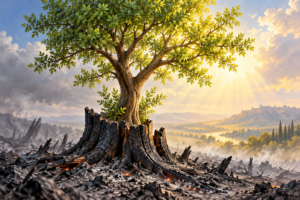
A brief genealogy in Parashat Vayeira opens a surprising story about Haran's descendants. What does his family's legacy have to do with one imperfect act of mesirut nefesh?

Collected Archive of Shoemaker Reports
A brief genealogy in Parashat Vayeira opens a surprising story about Haran's descendants. What does his family's legacy have to do with one imperfect act of mesirut nefesh?
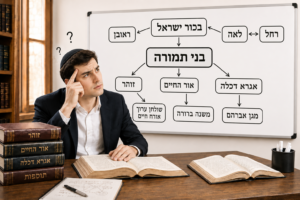
If Ya'akov intended Rachel but was with Leah, did that spiritually damage the soul of Reuven in some mystical way and remove him from his firstborn status? In the language of Chazal, was Reuven a "ben temurah"? This essay explores the mystery of Ya'akov, Leah, Rachel, Yosef, and Reuven, showing how Hashem's truth is exact: the firstborn blessing returned to Yosef, but Reuven was not rejected.

There are moments when history seems to hold its breath. Redemption unfolds in two stages – leaving and entering. The space between them is unstable, but not broken. That instability is called ra‘ad: the tremor that appears when inner truth begins to rule outer life.
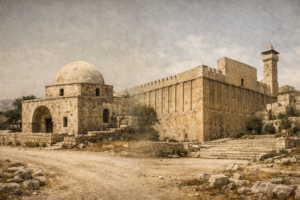
A profound reading of Parashat Vayechi exploring why Ya'akov buried Rachel on the road and Leah in Ma'arat ha-Machpelah. This report traces how Ya'akov places truth, love, and destiny at the end of life – revealing exile, permanence, and where each truth belongs.
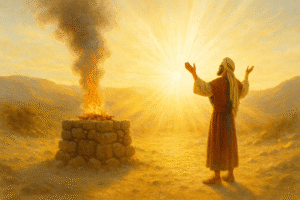
He conquered Lavan and Esav, but the final transformation came only when Ya'akov saw Leah for who she truly was. Becoming Yisrael meant learning to recognize the greatness that had been beside him all along.

Rachel’s silence in Vayeitzei hides one of the Torah’s most painful truths. For seven years she watched Leah receive the love, gifts, and destiny meant for her – and said nothing, choosing compassion over vindication. Her quiet sacrifice reshapes our understanding of the entire parashah.
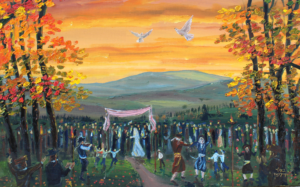
Ya’akov’s secret simanim to Rachel and the kohanim’s sanctification share a hidden purpose—removing impurity for divine service. Exploring Kabbalistic insights, this article uncovers the deep spiritual connection between these rituals, shedding light on holiness, purity, and the power of tz’niut.