How the Lowest Jew Can Receive the Highest Light
Is it possible for the lowest Jew to receive the highest spiritual light without becoming arrogant, broken, or ashamed? And if so, how?
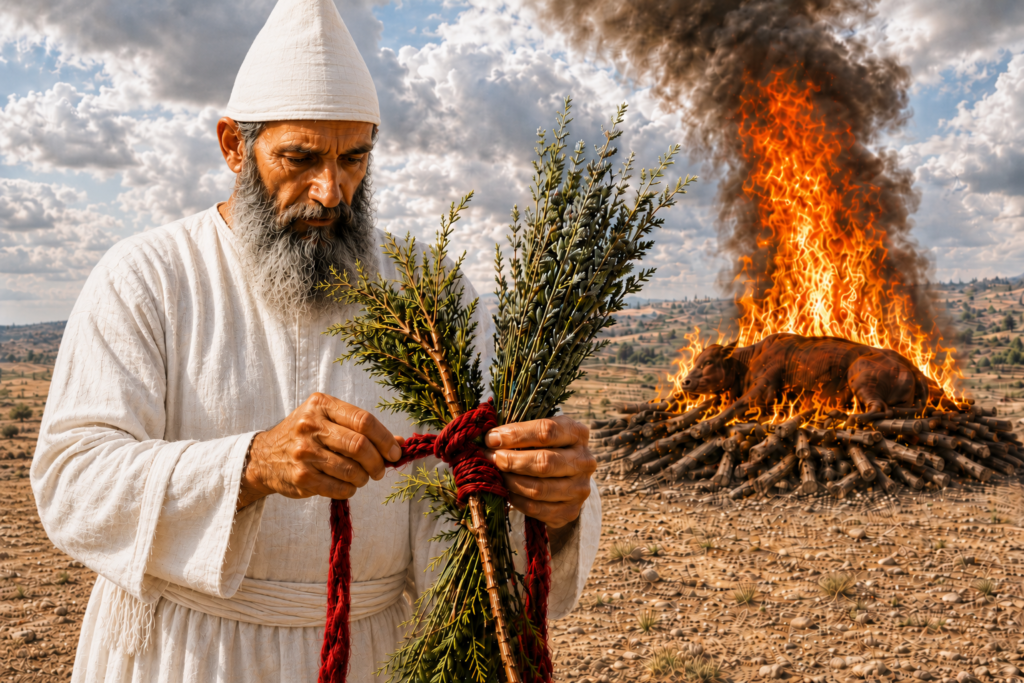
As the kohen burns the parah adumah in the fire, the Torah commands him to do something that seems somewhat strange (Bemidbar 19:6): וְלָקַח הַכֹּהֵן עֵץ אֶרֶז וְאֵזוֹב וּשְׁנִי תוֹלָעַת וְהִשְׁלִיךְ אֶל־תּוֹךְ שְׂרֵפַת הַפָּרָה (And the kohen shall take cedar wood, and hyssop, and crimson wool, and throw them into the midst of the burning heifer). Why these three? Why must the towering cedar, the lowest hyssop, and crimson-dyed wool come together?
In Likutei Halachot, R' Natan of Nemirov explains that the three items thrown into the burning of the parah adumah teach us the model for how the highest divine wisdom is brought down to the lowest people and places. He begins his explanation by writing (Hilchot Basar b'Chalav 5:27): עֵץ אֶרֶז וְאֵזוֹב זֶה בְּחִינַת שֵֹכֶל עֶלְיוֹן וְשֵֹכֶל תַּחְתּוֹן (The cedar wood and hyssop correspond to Seichel Elyon and Seichel Tachton). These terms do not merely refer to a higher and lower intellect in a generic sense, but rather to something much deeper. The former refers to a supernal, exalted perception of divine wisdom, while the latter refers to a lower, more accessible spiritual understanding. The cedar tree is presented as the tallest and most majestic of all the trees. It corresponds to the seichel of the Tzaddik (Tehillim 92:13): צַדִּיק כַּתָּמָר יִפְרָח כְּאֶרֶז בַּלְּבָנוֹן יִשְׂגֶּה (The Tzaddik will blossom like a date palm, he will grow like a cedar in the Lebanon). Although the plain meaning of the pasuk deals with the metaphor of a growing cedar tree, the deeper meaning of the word יִשְׂגֶּה [yisgeh], translated here 'will grow' points to הַשָּׂגָה [hasagah], intellectual attainment or spiritual comprehension. And what about the hyssop? Although R' Natan does not cite a source that the hyssop is lowly, the Tanakh itself states the contrast directly where it describes Shlomo ha-Melech speaking of the trees (Melachim Aleph 5:13): מִן־הָאֶרֶז אֲשֶׁר בַּלְּבָנוֹן וְעַד הָאֵזוֹב אֲשֶׁר יֹצֵא בַּקִּיר (from the cedar which is in the Lebanon to the hyssop that comes out from the wall). Putting this together, R' Natan writes: וְאֵזוֹב הוּא נָמוּךְ מְאֹד, זֶה בְּחִינַת הַקְּטַנִּים הַנְּמוּכִים מְאֹד שֶׁהַצַּדִּיק בְּעֹצֶם עַמְקוּת חָכְמָתוֹ הַגְּדוֹלָה הוּא מְצַמְצֵם שִֹכְלוֹ מִשֵּכֶל עֶלְיוֹן לְשֵֹכֶל תַּחְתּוֹן עַד שֶׁמַּכְנִיס גַּם בָּהֶם הַשָּגוֹת אֱלֹקוּת (And the hyssop is very low; this corresponds to the very small, lowly people, into whom the Tzaddik, through the profound depth of his great wisdom, contracts [m'tzamtzem] his Seichel Elyon to Seichel Tachton, until he brings hasagot Elokut even into them).
In summary, the cedar represents the Seichel Elyon, the lofty perceptions of the great Tzaddik, and the hyssop represents the Seichel Tachton of the people who are far from comprehending lofty hasagot Elokut. And the work of the Tzaddik is to take his very high, lofty wisdom and make it accessible so that the lowest people can receive it. But how?
The answer lies in the power of the crimson wool. Although the pasuk only said that the kohen is to throw all three into the pyre, the Rambam adds an important detail of the procedure (Hilchot Parah Adumah 3:2): וְכוֹרֵךְ הָאֵזוֹב עִם הָאֶרֶז בְּלָשׁוֹן שֶׁל שָׁנִי וּמַשְׁלִיךְ אֶל תּוֹךְ בִּטְנָהּ (And he binds the hyssop together with the cedar using a strip of crimson wool and throws it into the midst of its abdominal cavity). This is very important, because if we know what the strip of crimson wool represents, then we begin to understand how we lowly Jews are able to receive the Tzaddik's incredible Seichel Elyon through his tzimtzum. According to R' Natan: זֶה בְּחִינַת הָעַזּוּת דִּקְדֻשָּׁה, שֶׁעַל-יְדֵי-זֶה עִקַּר הַתּוֹרָה וְהַתְּפִלָּה, כִּי כָּל אֶחָד כְּפִי עַזּוּתוֹ דִּקְדֻשָּׁה (This is the aspect of holy boldness [azut di'kedushah], for through this is the essence of Torah and tefillah; for each person, according to his azut di'kedushah). The inner force that enables one's own seichel to be bound up together with the Seichel Elyon of the Tzaddik is azut di'kedushah. Clearly then, it is through this same attribute that one is able to grow in Torah and tefillah. But what is azut di'kedushah? It is the strength not to be ashamed before others when it comes to one's avodat Hashem – limud Torah, tefillah, mitzvah observance, and attachment to the true Tzaddik. In short, it is an inner quality not to be embarrassed before mockers, opponents, or scoffers.
The Tur writes at the beginning of Orach Chaim 1:1: יְהוּדָה בֶּן תֵּימָא אוֹמֵר הֱוֵי עַז כַּנָּמֵר וְקַל כַּנֶּשֶׁר רָץ כַּצְּבִי וְגִבּוֹר כָּאֲרִי לַעֲשׂוֹת רְצוֹן אָבִיךָ שֶׁבַּשָּׁמַיִם פֵּרַט אַרְבָּעָה דְבָרִים בַּעֲבוֹדַת הַבּוֹרֵא יִתְבָּרַךְ וְהִתְחִיל בְּעַז כַּנָּמֵר לְפִי שֶׁהוּא כְּלָל גָּדוֹל בַּעֲבוֹדַת הַבּוֹרֵא יִתְבָּרַךְ לְפִי שֶׁפְּעָמִים אָדָם חָפֵץ לַעֲשׂוֹת מִצְוָה וְנִמְנָע מִלַּעֲשׂוֹתָהּ מִפְּנֵי בְּנֵי אָדָם שֶׁמַּלְעִיגִין עָלָיו וְעַל כֵּן הִזְהִיר שֶׁתָּעִיז פָּנֶיךָ כְּנֶגֶד הַמַּלְעִיגִין וְאַל תִּמָּנַע מִלַּעֲשׂוֹת הַמִּצְוָה (Yehudah ben Teima says: Be bold as a leopard, light as an eagle, swift as a deer, and mighty as a lion to do the will of your Father in Heaven. He specified four things in the service of the Creator, may He be blessed, and began with 'bold as a leopard' because it is a great principle in the service of the Creator, may He be blessed. For sometimes a person desires to do a mitzvah, but refrains from doing it because of people who mock him; and therefore, he warned that you should show boldness before the mockers and not refrain from doing the mitzvah). This is the meaning of azut di'kedushah – boldness to fulfill the will of Hashem even when others make fun of, humiliate, or disgrace you for doing so. This is the very beginning of avodat Hashem. But this is not just written in the Tur; its principle is codified by the Rema (Shulchan Aruch, O.C. 1:1): ולא יתבייש מפני בני אדם המלעיגים עליו בעבודת הש"י (And he should not be ashamed before people who mock him in the service of Hashem, may He be blessed).
The Mishnah Berurah adds (O.C. 1:5): ועל כל פנים לא יתקוטט עמהם, מפני שמידת העזות מגונה מאד, ואין ראוי להשתמש ממנה כלל, אפילו בעבודת השם יתברך, כי יקנה קניין בנפשו להיות עז אפילו שלא במקום עבודתו יתברך (In any case, he should not quarrel with them, because the trait of brazenness [azut] is extremely disgraceful, and it is not proper to make any use of it at all, even in avodat Hashem, blessed be He; for he will acquire it as an acquisition in his soul, becoming brazen even when it is not in the place of serving Him, blessed be He). But how can this be? The Mishnah Berurah says the trait of azut is so disgraceful that one should not use it even in avodat Hashem, so how can R' Natan identify the crimson wool with azut di'kedushah, and make it a central pillar for growing in high levels of Torah and tefillah? The answer is that there are two different things being discussed. The Mishnah Berurah forbids turning azut into a personality trait. R' Natan requires a sanctified form of it that protects avodat Hashem from shame and collapse.
If this is true, why then did the Mishnah Berurah consider it necessary to write what he wrote? He was giving us the necessary guardrail. Without his words, a person could easily mistake R' Natan's azut di'kedushah for religious arrogance. But now, that misunderstanding is avoided. The definition becomes exact: azut di'kedushah is not a license to fight. It is not outward aggression. Rather, it is inward courage – the refusal to be shamed out of serving Hashem. That's the critical distinction. And the proof is the imagery itself: the crimson wool [שני תולעת, sh'ni tola'at] is connected to תולעת [tola'at], the worm, the ultimate symbol of shiflut. As David ha-Melech testifies of himself (Tehillim 22:7): וְאָנֹכִי תוֹלַעַת וְלֹא־אִישׁ חֶרְפַּת אָדָם וּבְזוּי עָם (But I am a tola'at and not a man, a disgrace of a man, and held in contempt by the nation). David was not arrogant, but he did possess the strength of character, the trait of azut di'kedushah, to serve Hashem in the face of all of those who mocked him, humiliated him, opposed him, and sought to destroy him.
So why must all of this be thrown into the fire? At the very end of this teaching in Hilchot Basar b'Chalav 5:27, R' Natan explains: וְכָל זֶה מַשְׁלִיכִין לְתוֹךְ שְֹרֵפַת הַפָּרָה אֲדֻמָּה, שֶׁשֹּוֹרְפִין אוֹתָהּ בָּאֵשׁ, שֶׁהוּא בְּחִינַת לַבַּת אֵשׁ, שֶׁהוּא בְּחִינַת צִמְצוּם הַקָּדוֹשׁ שֶׁל הַשֵּכֶל הַנַּ"ל (And all of this is thrown into the burning of the parah adumah, for they burn it in fire, which is the aspect of the flame of fire, which is the aspect of the holy tzimtzum of the seichel mentioned above). Whose holy tzimtzum? The Tzaddik is m'tzamtzem his own Seichel Elyon into a form known as Seichel Tachton, accessible to all, so that even the lowliest among us can receive lofty hasagot Elokut.
So the cedar, hyssop, and crimson wool work together and reveal the full process: the Seichel Elyon of the Tzaddik, represented by the cedar, descends to the lowly, represented by the hyssop, through the lowly Jew's azut di'kedushah, represented by the crimson wool, which binds him to the Tzaddik. The outcome is holy speech – Torah and tefillah – through which hasagot Elokut are brought even into very low places.
What we need is not arrogance, chas v'shalom, but the ability not to collapse in the face of opposition, scorn, and mockery – to see ourselves like the lowly worm, yet bold as a leopard – the trait of azut di'kedushah, the courage that lets the hyssop receive from the cedar.