The Rectification of Fallen Love
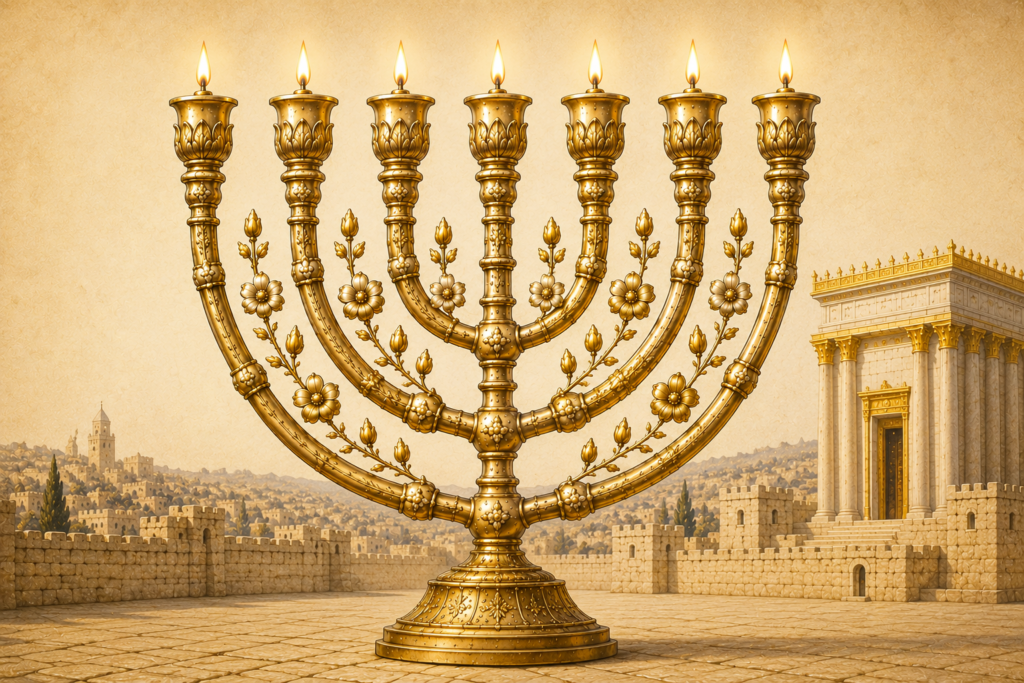
Parashat Beha'alotecha begins with Aharon lighting the holy menorah for the very first time, followed by a brief restatement of several details about it that the Torah had already described earlier at length (Bemidbar 8:4): וְזֶה מַעֲשֵׂה הַמְּנֹרָה מִקְשָׁה זָהָב עַד־יְרֵכָהּ עַד־פִּרְחָהּ מִקְשָׁה הִוא כַּמַּרְאֶה אֲשֶׁר הֶרְאָה יְיָ אֶת־מֹשֶׁה כֵּן עָשָׂה אֶת־הַמְּנֹרָה (And this is the making of the menorah: hammered gold from its thigh to its flower, it was hammered, according to the vision that Hashem showed Moshe, so he made the menorah).
Why does the Torah decorate the menorah with flowers? Think about it. The menorah is the ultimate embodiment of Divine light, kedushah, revelation, and Torah in this world, so why adorn it with blossoms? Yes, flowers are beautiful, but why should the vessel of pure kedushah resemble something associated with physical attraction, outward beauty, and the seductive pull of the visible world?
R' Levi Yitzchak of Berditchev, the Kedushat Levi writes (Terumah 8): וזהו הרמז, כי המנורה כדמות המדות אשר העולמות עובדים בהם את הבורא והם שבע מדות וזהו קני המנורה. וזהו הרמז בהעלותך את הנרות [במדבר ח, ב] דהיינו המדות לעבוד בהם את הבורא יתברך. אל מול פני המנורה המנורה הוא מרמז על השכינה המאיר באלו המדות יאירו שבעת הנרות (And this is the remez: the menorah corresponds to the middot through which the worlds serve the Creator, and these are the seven middot, and these are the branches of the menorah. And this is the remez of 'When you raise up the lamps' [Bemidbar 8:2], namely, the middot through which one serves the Creator, may He be blessed. 'Toward the face of the menorah' – the menorah alludes to the Shechinah that illuminates within these middot – 'the seven lamps will illuminate'). What are these seven middot of which he speaks? They comprise the six 'male' middot of chesed, gevurah, tiferet, netzach, hod and yesod, and the one 'female' middah of malchut.
The meaning of each of these middot is known from Kabbalah, and now is not the place to go into them in detail. But in simple terms, they are the fundamental emotional and spiritual powers through which we relate to the world, to other people, and ultimately to Hashem Himself. According to the Kedushat Levi, the menorah is not merely a holy object standing inside the Mishkan. It is a symbolic portrait of the illuminated inner life of man, the spiritual and emotional structure of the human soul.
Returning to the structure of the menorah itself, he writes: וזה מעשה המנורה וכו' [במדבר ח, ד]. הכלל, כי יש שלשה אהבות בעולם, דהיינו אהבה לדבר אסור רחמנא ליצלן, וגם יש אהבה לדבר המותר שמותר לאהוב דבר המותר אבל באמת גם זה אינו תכלית האהבה, כי עיקר היא פנימיות האהבה אשר באלו שני בחינות הנשפע מהבורא ברוך הוא ('And this is the making of the menorah…' [Bemidbar 8:4]. The rule is that there are three kinds of love in the world, that is, a love for something forbidden, Rachmana litzlan, and also there is a love for something permitted, for it is permitted to love that which is permitted, but in truth, even this is not the ultimate purpose of love, for the essence is the penimiut [i.e. inner dimension] of the love that is present in these two aspects, which flows from the Creator, blessed be He). So our mission in life is to take the penimiut of the love which is clothed in these two outer garments and redirect it to the love of Hashem Himself. By doing so, we elevate the sparks of kedushah that are embedded in all of creation.
But the Kedushat Levi continues by explaining something, which at first glance, seems startling: כי אסור לאדם לומר שיש איזה דבר בעולם בלתי הנשפע מהשורש העליון רק שצריך האדם להסתכל הפנימיות אשר בזה הדבר, דהיינו דבר זה יש בו אהבה אזי צריך ליקח אותו האהבה ולעבוד בה את הבורא וכן בשאר המדות ונמצא מדבק לשורש ומעלה הנצוצות (For it is forbidden for a man to say that there is any thing in the world that is not influenced from the upper root; rather, a man must look at the penimiut that is within the thing, i.e. this thing contains love within it. Therefore, one must take that love and serve the Creator with it – and likewise with the other middot, thus he becomes attached to the root and elevates the sparks). The menorah does not merely symbolize abstract spiritual light. It embodies the emotional life of man itself – especially the mysterious and dangerous power of love. Even fallen or distorted loves are not entirely disconnected from kedushah – even they have at their root a Divine shefa. Let that sink in because most of us function, at least subconsciously, believing that this cannot be so.
The Kedushat Levi is saying something quite counterintuitive. The very capacity for longing itself does not originate from tumah, but from kedushah – from Above. Even when love becomes attached to forbidden things, the underlying power of love still flows from a source that is kadosh. The avodah, therefore, is not to deny the existence of longing, but to redirect it and reconnect it to its root. That is subtle but extraordinarily important. The tragedy is not that man longs too deeply, but that his longing becomes trapped within external things and he becomes forgetful of its true source. This is very close to what R' Nachman explains in Likutei Moharan 1: כִּי אִישׁ הַיִּשְׂרְאֵלִי צָרִיךְ תָּמִיד לְהִסְתַּכֵּל בְּהַשֵּׂכֶל שֶׁל כָּל דָּבָר, וּלְקַשֵּׁר עַצְמוֹ אֶל הַחָכְמָה וְהַשֵּׂכֶל שֶׁיֵּשׁ בְּכָל דָּבָר, כְּדֵי שֶׁיָּאִיר לוֹ הַשֵּׂכֶל שֶׁיֵּשׁ בְּכָל דָּבָר לְהִתְקָרֵב לְהַשֵּׁם יִתְבָּרַךְ עַל־יְדֵי אוֹתוֹ הַדָּבָר, כִּי הַשֵּׂכֶל הוּא אוֹר גָּדוֹל, וּמֵאִיר לוֹ בְּכָל דְּרָכָיו (For a Jewish man must constantly look at the Divine Intelligence [seichel] within every thing, and bind himself to the chochmah and the seichel that exist within every thing, so that the seichel that is in every thing will illuminate for him how to draw close to Hashem, may He be blessed, through that very thing, for the seichel is a great light, and it illuminates him in all his ways).
But we are not speaking merely in abstractions, for the Kedushat Levi turns back to the actual structure of the menorah itself – and suddenly, the Torah's strange imagery begins to take on an entirely new meaning. He focuses on two specific features of the menorah: its thigh (its grounded lower structure), and its flowers. These are not random decorative details. They describe two stages in the descent of love into the human condition.
This is what he writes about the thigh of the menorah: וזהו עד ירכה, דהיינו האהבה אשר בזה העולם לדברים המותרים אשר הוא מרומז בירכה, דהיינו סוף המדריגה ככתוב [בראשית א, כו] נעשה אדם בצלמינו (And this is 'from its thigh', that is, the love that exists in this world for permitted things, which alludes to 'its thigh', that is, its lowest level, as it is written [Bereshit 1:26]: 'Let us make man in our image'). The thigh of the menorah represents love as it descends into ordinary embodied life. This is not fallen love. On the contrary, it is what he calls 'its lowest level' – i.e., the lowest permissible manifestation of love – the realm of human attachment: marriage, family, beauty, continuity, emotional connection, and the ordinary loves through which human life unfolds in this world. This is why the Kedushat Levi connects the thigh to Bereshit 1:26: נַעֲשֶׂה אָדָם בְּצַלְמֵנוּ (Let us make man in our image). Why would he connect the menorah to the creation of man in the tzelem-Elokim? It is because the menorah is not describing angels. It is describing man, and the tzelem-Elokim becomes expressed mainly through human reproductive life within the bounds of holy intimacy. This is the same expression as we read in Shemot 1:5: וַיְהִי כׇּל־נֶפֶשׁ יֹצְאֵי יֶרֶךְ־יַעֲקֹב שִׁבְעִים נָפֶשׁ וְיוֹסֵף הָיָה בְמִצְרָיִם (And each soul that emerged from the thigh of Ya'akov was seventy souls, and Yosef was in Egypt). The Torah does not seek to eradicate earthly love, chas v'shalom, but to sanctify it. As the Am Kadosh, we are not commanded to escape the physical world, but to live within it without becoming severed from its holy source.
But the menorah does not end with the thigh. It blossoms outward into flowers. Continuing on with the Kedushat Levi: עד פרחה, דהיינו הפנימיות מהאהבה אפילו לדבר האסור, כי פרחה הוא לשון דבר הנופל, דהיינו שנפל האהבה לדבר האסור וזהו פרחה ('Until its flower,' that is, the penimiut of love even for something forbidden. For 'its flower' is an expression of something fallen, that is, that the love has fallen toward something forbidden, and this is 'its flower'). Here the symbolism becomes even more striking. A flower is beautiful, attractive, fragrant, and outward-facing. It draws the eye immediately. But it is also fragile and fleeting. It blooms brilliantly and then withers and falls – a perfect symbol of fallen sensual desire.
And then to make sure that we don't miss the deeper structure of what he is revealing, the Kedushat Levi points out that 'flower' [פרח, perach] has the gematria of 288: רפ"ח נצוצין (288 sparks). That's all he says on the subject. Not just that perach has the gematria of 288, but that davka, it is the exact same letters, just rearranged in the way the fallen sparks are referred to in the Kabbalistic sources. In the language of the Kabbalah of the Arizal, the "288 sparks" refer to remnants of kedushah that became scattered and concealed throughout the physical world after the primordial "shattering of the vessels." Ever since then, man's task has been to uncover and elevate those hidden sparks back to their Divine source.
Suddenly, the symbolism of the flower becomes much deeper. The very thing that outwardly appears most attractive and captivating in this world may also be the very place where hidden sparks of kedushah are concealed. So how are the sparks elevated when they are concealed within something forbidden? The answer is truly astonishing: when a man holds himself back from what is forbidden, he weakens the grip that the klipot have on those sparks, and instead of remaining trapped in their fallen state, they begin to rise back toward their source Above.
This idea becomes even deeper in light of a remarkable teaching from R' Nachman where he explains that fallen loves are not merely a psychological problem, but the result of a cosmic fracture that took place at the very root of creation itself (Likutei Moharan 34:7): וְהוּא בְּחִינַת אַהֲבָה נְפוּלָה וּשְׁבוּרָה, כִּי יָדוּעַ שֶׁהַיֵּצֶר הָרָע וְהַקְּלִפּוֹת נִתְהַוִּים מִן שְׁבִירַת כֵּלִים (And this is the aspect of fallen and shattered love, for it is known that the Yetzer ha-Ra and the klipot exist from the shattering of the vessels). Now the entire discussion of the Kedushat Levi becomes illuminated. Forbidden loves are not merely bad desires. They are shattered loves, something holy that became broken – something pure that became fragmented and descended into the lower worlds.
But then he says something astonishing. Even though the vessels shattered, the light itself did not completely fall along with them: וְהָאוֹר הַחֶסֶד נִשְׁאָר בִּיסוֹד דַּאֲצִילוּת, שֶׁהוּא בְּחִינַת [משלי י':כ"ה] צַדִּיק יְסוֹד עוֹלָם (But the light of chesed remained in the yesod of Atzilut, which is the aspect of [Mishlei 10:25]: 'Tzaddik, the foundation [yesod] of the world'). This is an extraordinarily important point. Although the vessels shattered, the light itself remained above in kedushah in the highest world of Atzilut. The root of love never descended or became impure. The root remained intact, in place. And this light is the light of the Tzaddik, who is the yesod of the world. This is why R' Nachman states: נִמְצָא שֶׁאַהֲבוֹת רָעוֹת בָּאִים מִשְּׁבִירַת כְּלֵי הַחֶסֶד (It follows that evil loves come from the shattering of the vessels of chesed). Read that carefully. He does not say that love itself is evil. He says that fallen loves emerge from shattered vessels of chesed, the very middah of holy love. The problem is not the existence of longing itself. The problem is that the vessels became broken, and the holy flow of love descended into distorted forms.
So what is the tikkun for fallen loves? R' Nachman explains: וּכְשֶׁמְּקַשֵּׁר הַלֵּב, הַיְנוּ בְּחִינַת וָאו כַּנַּ"ל, לְהַיּוּד, הַיְנוּ נְקֻדָּה, שֶׁהוּא בְּחִינַת צַדִּיק, שֶׁשָּׁם הָאוֹר הָאַהֲבָה הַקְּדוֹשָׁה שׁוֹרֶה, כִּי אוֹר הַחֶסֶד נִשְׁאָר בִּיסוֹד דַּאֲצִילוּת – אֲזַי נִתְבַּטֵּל הָאַהֲבוֹת רָעוֹת (And when one binds the heart – which is the aspect of the vav, as mentioned above – to the yud, which is the point, which is the aspect of the Tzaddik, for there the light of holy love dwells, for the light of chesed remained in the yesod of Atzilut – then the evil loves become nullified). Without getting into the details about the vav and the yud, and so on, the main point is that the shattered heart reconnects itself upward to the point where holy love still remains intact, and that can only happen by connecting oneself to the Tzaddik, the yesod of the world. The tikkun is not the destruction of love itself, but its reconnection to its unbroken root.
Therefore, we see that the flowers of the menorah no longer appear decorative at all. The menorah is revealing the entire drama of the human heart. Its lights are the holy middot through which man serves Hashem. Its thigh is the descent of those lights into permitted human love that is associated with marriage, continuity, beauty, etc. Its flowers are the outward blossoming of desire as it enters the visible world of attraction and longing. And hidden within those flowers are the 288 sparks – the fallen sparks waiting to be elevated back toward their source.
The menorah therefore becomes a map of both man's danger and his greatness. The same world that can pull a man downward into fragmentation can also become the very place through which he uncovers hidden kedushah and returns it upward to Hashem. The flower remains attached to the menorah. And that is its very secret.
Kedushah does not emerge by worshipping the flower or even by destroying the flower, but by reconnecting the flower to its true light source.