

Kotzer Ruach, Collapse, and the Limits of Human Capacity
At the end of Parashat Shemot, Moshe returns to Egypt to redeem B'nei Yisrael. He promises redemption and they respond favorably (Shemot 4:31): וַיַּאֲמֵן הָעָם וַיִּשְׁמְעוּ כִּי־פָקַד יְיָ אֶת־בְּנֵי יִשְׂרָאֵל וְכִי רָאָה אֶת־עׇנְיָם וַיִּקְּדוּ וַיִּשְׁתַּחֲווּ (And the people believed [had emunah] and heard because Hashem remembered B'nei Yisrael and because He saw their suffering; and they bowed down and worshiped). The people are excited and everyone is aligned with Moshe and his mission.
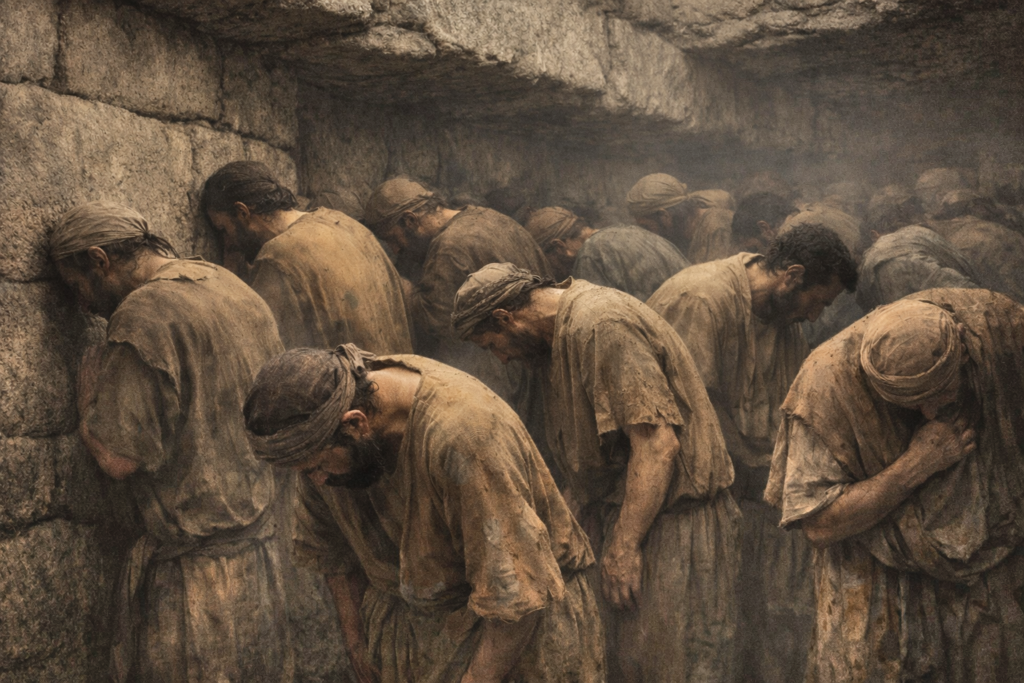
But then what happens? Moshe goes to Pharaoh and speaks in G‑d's name. Pharaoh makes light of his demands, speaks arrogantly toward him and toward Hashem, and decides to intensify the bondage. The labor becomes harder, the suffering becomes more unbearable, and even though at the beginning of Parashat Va'eira Moshe returns to the people with a message of hope, his words don't have the intended effect (Shemot 6:9): וַיְדַבֵּר מֹשֶׁה כֵּן אֶל־בְּנֵי יִשְׂרָאֵל וְלֹא שָׁמְעוּ אֶל־מֹשֶׁה מִקֹּצֶר רוּחַ וּמֵעֲבֹדָה קָשָׁה (And Moshe spoke thus to B'nei Yisrael, and they didn't hear Moshe because of shortness of breath [kotzer ruach] and the harsh labor). They don't hear Moshe's words of redemption. In fact, they can't hear it. It's not rebellion. It's collapse. Hashem does not criticize the people, and neither does Moshe. The Torah simply describes the fact without moralizing.
Sometimes there exists a level of pain so intense, so all-encompassing, so crippling, and so devastating, that even words of redemption can't be heard.
So even though Moshe cared for the people as a loving mother cares for her children, it didn't make a difference. Paraphrasing Shemot 5:22-23, he said: "I did everything you told me to do. I was responsible. But things got worse! What more was I supposed to do?" His cry wasn't from someone who rejected Hashem, chas v'shalom, or doubted His existence or His truth. It was the cry of someone who acted with love, courage, and sacrifice – and yet, watched suffering increase anyway. Here, the Torah is teaching a deep and difficult truth. Doing everything right does not guarantee relief from unbearable pain. That is existential truth, and the Torah neither shies away from it nor softens its impact.
What happens next? Although the people can't hear and are at the breaking point, Hashem decides to move forward with redemption anyway. Think about that. On one hand, it is deeply encouraging; on the other, it is devastating. Redemption comes slowly – a whole year passes. Life goes on. Jews are born; Jews die. Some live to see the redemption; others do not. In fact, up to eighty percent of the Jewish people never live long enough to see it (Rashi on Shemot 13:18).
Here we encounter a decisive truth: redemption is not a response to suffering or to human preparedness. Rather, it begins with a Divine decision to fulfill the promise made to the Patriarchs. Pain may persist and wounds may remain open, but they do not define exile nor do they determine redemption. Redemption proceeds because the fulfillment of the covenant cannot remain suspended indefinitely. This is not speculation. If you read the pesukim carefully (Shemot 6:2-8), you will see that this is precisely how Hashem explains why redemption must proceed even in the current milieu: it moves forward because of covenant, because B'nei Yisrael are the descendants of Avraham, Yitzchak, and Ya'akov.
Into this uncomfortable space steps R' Nachman of Breslov and declares openly the unspoken message of Parashat Va'eira: avodah can continue when things don't make sense, when people's spirits are weak, when people are broken, and even when pain is crushing and beyond the limits of human endurance.
It is written in Likutei Moharan II:86: וְהָעֲבוֹדָה־זָרָה וְהַכְּפִירוֹת הֵם בִּבְחִינַת (תהלים קלה): אַף אֵין יֵשׁ רוּחַ בָּהֶם – שֶׁאֵין בָּהֶם שׁוּם רוּחַ כְּלָל. וְהַקְּטַנֵּי־אֲמָנָה הֵם בִּבְחִינַת מִקֹּצֶר־רוּחַ, שֶׁהוּא כְּמוֹ מְמֻצָּע (Idolatry and heresy are in the category of [Tehillim 135:17]: 'Indeed, they have no ruach in their mouths' – they have absolutely no ruach in them at all. And those of small emunah [ketanei amanah] are in the category of kotzer ruach, which is like an in between state) – a state between total emunah and complete heresy. And lest we think that we don't fall into the category of ketanei amanah, read what he teaches later in this same Torah: וְיֵשׁ כַּמָּה בְּחִינוֹת בִּקְטַנֵּי אֱמוּנָה. כִּי יֵשׁ אֲפִלּוּ צַדִּיקִים שֶׁהֵם קְטַנֵּי אֲמָנָה (And there are many categories of ketanei emunah, for there are even tzaddikim who are ketanei amanah). B'nei Yisrael – even many of us today, a lot of the time – end up in a state of kotzer ruach. But that didn't make them (or us) heretics. And if we're even a little bit introspective on this point, we will see that there are times in our lives when we also can't hear truth.
This is why we wrote above that kotzer ruach is not rebellion. It's a state of ketanei amanah – small of emunah – a description of one's capacity at a given point in time, not an indictment. The person has emunah. He has belief, but it's not expansive. It has limits, and the person is very vulnerable because he could reach the breaking point, chas v'shalom. That's the danger of kotzer ruach – not the condition itself, but where it could lead. Too much unrelenting pressure and it could snap. And even if, chas v'shalom, someone were to reach that endpoint, it's only because there was no relief. And as a result, they're not guilty. Why not? Because their condition wasn't chosen. It was imposed.
To be precise, the danger is that if suffering intensifies beyond a certain threshold, da'at itself can collapse. But even then, if the collapse of da'at was preceded by kotzer ruach it is not heresy. R' Nachman explains this in Likutei Moharan 65:3: אך עיקר הצער שיש לאדם מהיסורין … הוא רק מחמת שלוקחין מהאדם הדעת, עד שאין יכול להסתכל על התכלית (However, the main pain that a person experiences from suffering … is solely because they took da'at from the person, to the point that he's unable to focus on the purpose). The pain of suffering is felt when da'at is taken, to the point that a person can no longer perceive the purpose, not that the suffering itself is caused by a lack of da'at. This is not punishment, since punishment presupposes moral agency, which is not operative here. Rather, da'at collapses because the pain itself overwhelms the person. As R' Nachman says, 'they took it from him.' Who took his da'at? Not the person suffering, and not as an act of punishment. The "they" refers to the impersonal workings of din operating through human limitation under overwhelming suffering – a collapse of da'at that occurs without moral fault, accusation, or deliberate bechirah.
The world is a dangerous place, and it contains forces that can overwhelm a person's internal capacity. If such a situation arises, the person is unable to see meaning in his suffering. In such a state – and it can be reached if the suffering and the pain is unrelenting and intense – the person reaches the limits of his capacity and as such, his actions can no longer be evaluated in the same way as before. As Rabbeinu adds: ואף שהאדם אינו יודע כלום מה הוא עושה, אף על פי כן הנפש יודעת הכל (And even though the person does not know anything at all of what he is doing, nevertheless the soul knows everything). And if a person can reach the point of not even knowing what he's doing, how can he be held liable? He can't. This is where bechirah becomes reactionary, not deliberate. And here's the tough part – Rabbeinu doesn't explain why. His focus is on the human experience, not on explaining Divine justice.
So did the people manage to leave the state of kotzer ruach? If you read the parashah carefully, you will see that the Torah does not say when or if the people left the state of kotzer ruach. What does the Torah describe?
It records that the expansion of inner capacity follows external relief, not the other way around. Simply put, B'nei Yisrael did not work their way out of being overwhelmed. Space must be provided first. This is what David ha-Melech wrote (Tehillim 118:5): מִן־הַמֵּצַר קָרָאתִי יָּ-הּ עָנָנִי בַמֶּרְחָב יָ-הּ (From the constriction I called out to Yah; Yah answered me with expansiveness). Read the pasuk carefully. It describes a movement initiated from outside. The person is in constriction, he calls out from within it, and the answer is expansiveness itself! The expanded consciousness is not generated from within; it is the response. We can't do this for ourselves. The Torah doesn't teach bootstrapping oneself into a higher spiritual state.
Therefore, what actually happened? Did B'nei Yisrael leave their state of kotzer ruach? Yes, gradually. The plagues weakened Pharaoh's control, the labor regime began to destabilize, the prison began to crack, a sense of time and space reappeared, and ultimately, breath reappeared. That's how the kotzer ruach was alleviated, not from within, but from without, through the process of redemption itself.
But even so, the difficult truth is that redemption came in time for some, but not in time for others. There is no explanation of why one person or why not another person. The Torah does not go there. It leaves the question unresolved, refusing to replace ignorance with false clarity.

One Response
רגל
RESH IMPLIES REMEMBER THE BEGINNING AND WHO CREATED EVERYTHING
GIMEL IMPLIES IT IS ALL FOR THE GOOD
LAMED IMPLIES IT IS FROM HEAVEN ABOVE
TOTAL ANALYSIS
ALWAYS KEEP PUTTING ONE FOOT IN FRONT OF THE OTHER