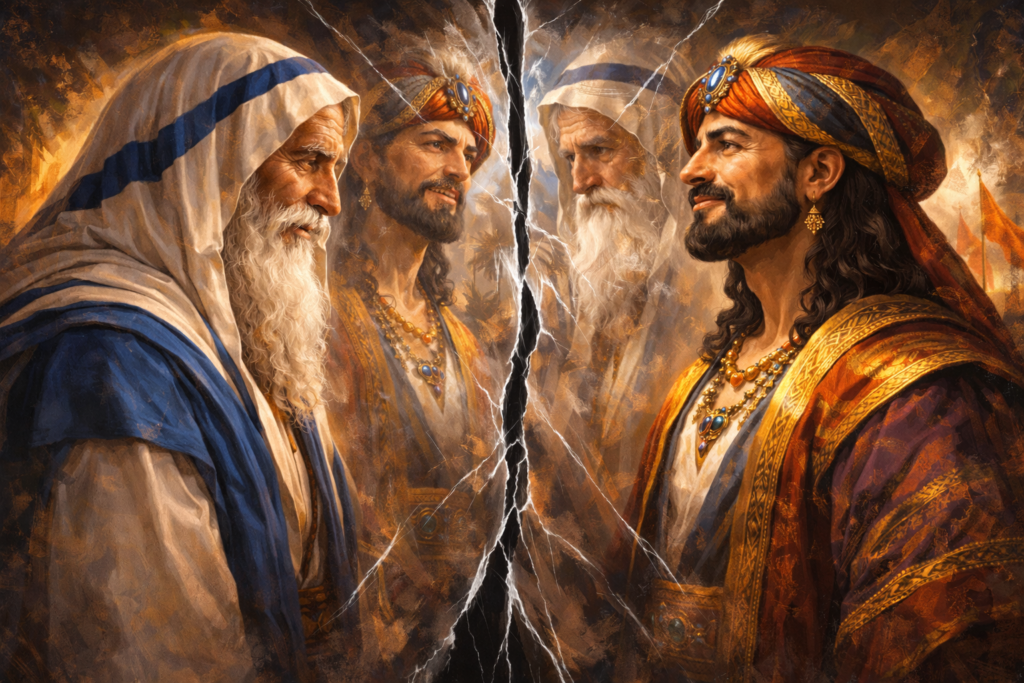
Moshe Rabbeinu, Shiflut, and the Paradox of Greatness
The Mishkan has been built and erected, and the Shechinah has come to rest within it. Sefer Vayikra now begins with the words (Vayikra 1:1): וַיִּקְרָא אֶל־מֹשֶׁה וַיְדַבֵּר יְיָ אֵלָיו מֵאֹהֶל מוֹעֵד לֵאמֹר (And He called to Moshe, and Hashem spoke to him from the Tent of Meeting, saying …). The first word of the pasuk – וַיִּקְרָא – ['And He called'] is written in the Sefer Torah with a small א, alluding to the humility of Moshe Rabbeinu (Bemidbar 12:3): וְהָאִישׁ מֹשֶׁה עָנָו מְאֹד מִכֹּל הָאָדָם אֲשֶׁר עַל־פְּנֵי הָאֲדָמָה (And the man Moshe was very humble, more than any person on the face of the earth).
The Ba'al ha-Turim writes about that small aleph: שמשה לא רצה לכתוב אלא ויקר כדרך שנא' בבלעם כאלו לא נראה לו השם אלא במקרה ואמר לו הקב"ה לכתוב גם באל"ף וכתבה קטנה (That Moshe only wanted to write ויקר [vayikar], as it is said about Bila'am, as if Hashem only appeared to him by chance [b'mikra], but Ha-Kadosh, baruch Hu, told him to write it also with the aleph – so he wrote it small). What is at issue here? Rashi explains: אֲבָל לִנְבִיאֵי אֻמּוֹת הָעוֹלָם נִגְלָה עֲלֵיהֶן בִּלְשׁוֹן עֲרָאִי וְטֻמְאָה, שֶׁנֶּאֱמַר וַיִּקָּר אֱלֹקִים אֶל בִּלְעָם (But to the prophets of the nations of the world He revealed Himself to them in a language of chance and tumah, as it says [Bemidbar 23:4]: 'And G‑d happened [vayikar] upon Bila'am'). What is Rashi referring to? The word vayikar relates to both chance [מִקְרֶה, mikreh] and nocturnal emission [קֶרִי, keri]. So although vayikra indicates an intentional calling, vayikar indicates a chance encounter with the disgrace of tumah. We may not often think about this, but it is how Moshe viewed himself. As is often said, in his arrogance Bila'am thought he was like Moshe, and in his humility, Moshe thought he was like Bila'am.
In what way was Moshe more humble than any other person? There are many ways to address this question, but let's focus on the Maor Va'Shemesh, a foundational chassidic work written by R' Kalonymus Kalman Epstein of Krakow, one of the main talmidim of R' Elimelech of Lizhensk and the Chozeh of Lublin. He asks a simple question: How come every time Hashem begins to communicate with Moshe, He begins by calling him? His answer is simple and powerful: Moshe refused to step forward unless he was called. Although Moshe's humility is often framed in mystical or symbolic language, the Maor Va'Shemesh, drawing on the Midrash Rabbah, understands it in simple, behavioral terms. Moshe stood aside at the burning bush, the sea, Har Sinai, and in the Mishkan. Even after repeated revelations, Moshe just assumed that someone else was more worthy, and therefore, when Hashem instructed him to write ויקרא, he instinctively wanted the word minimized. The small aleph became the natural reflex of that attitude.
This may be difficult for us to understand, but the Maor Va'Shemesh explains that this is the level of the tzaddikim in every generation: והענין ההוא מלמד להצדיקים שבכל דור ודור שלא לדמות בדעתו שראוי לאותו השג' שהושג הגם שהוחזק זה כמה פעמי' שנגלה לו כ"א צריך להכניע את עצמו ולהחליט בדעתו שאינו ראוי לדבר זה להשיג איזה השגה או לפעול איזה פעולה (And that teaching instructs the tzaddikim in every generation not to imagine in their mind that they are worthy of the attainment that they have attained, even though it has already been established several times that something has been revealed to them; rather, a person must bring himself into submission and decide in his mind that he is not worthy of such a thing – to attain any perception or to accomplish any action). He continues by connecting it back to Moshe Rabbeinu: ואף שהוא רואה שמוכן לדבר זה יותר משאר בני אדם אעפ"כ יגמור בדעתו שאינו ראוי שצריך להיות בגדר ענוה והכנע' מאד עד שיהי' מוכרח מן השמים לאותו השגה, וזה הענין היה גם כן במשה רבינו עליו השלום (And even if he sees that he is more prepared for this matter than other people, even so, he must conclude in his mind that he is not worthy, for one must be within the bounds of humility and great submission until he is forced by Heaven to that attainment – and this was also the case with Moshe Rabbeinu, peace be upon him).
The question now is, Why must the tzaddikim in general, and Moshe Rabbeinu in particular, work with such rigor to reach this level of humility? The Rambam provides the answer in the Mishneh Torah in his explanation of וְהָלַכְתָּ בִּדְרָכָיו (Devarim 28:9) – and you shall walk in His ways. He writes in Hilchot De'ot 1:6: מַה הוּא נִקְרָא חַנּוּן אַף אַתָּה הֱיֵה חַנּוּן. מַה הוּא נִקְרָא רַחוּם אַף אַתָּה הֱיֵה רַחוּם. מַה הוּא נִקְרָא קָדוֹשׁ אַף אַתָּה הֱיֵה קָדוֹשׁ. וְעַל דֶּרֶךְ זוֹ קָרְאוּ הַנְּבִיאִים לָקֵל בְּכָל אוֹתָן הַכִּנּוּיִין אֶרֶךְ אַפַּיִם וְרַב חֶסֶד צַדִּיק וְיָשָׁר תָּמִים גִּבּוֹר וְחָזָק וְכַיּוֹצֵא בָּהֶן. לְהוֹדִיעַ שֶׁהֵן דְּרָכִים טוֹבִים וִישָׁרִים וְחַיָּב אָדָם לְהַנְהִיג עַצְמוֹ בָּהֶן וּלְהִדַּמּוֹת אֵלָיו כְּפִי כֹּחוֹ (Just as He is called Gracious, so you should be gracious. Just as He is called Compassionate, so you should be compassionate. Just as He is called Holy, so you should be holy. And in this manner the prophets referred to G‑d with all those appellations – slow to anger, abundant in kindness, righteous and upright, perfect, mighty and strong, and the like – to make known that these are good and upright ways, and a person is obligated to conduct himself in them and to make himself resemble Him according to his ability). Therefore, it is not just the tzaddikim who must strive for this – it is all of us.
Although the Rambam did not specifically mention humility in this abbreviated list of attributes, if it is an attribute of Hashem, then it must be included by definition. So we ask, Is Hashem humble?
It is taught by Chazal (Megillah 31a): אָמַר רַבִּי יוֹחָנָן: כׇּל מָקוֹם שֶׁאַתָּה מוֹצֵא גְּבוּרָתוֹ שֶׁל הַקָּדוֹשׁ בָּרוּךְ הוּא, אַתָּה מוֹצֵא עִנְוְותָנוּתוֹ (R' Yochanan said, Every place where you find a reference to the might of Ha-Kadosh, baruch Hu, you find His humility). And what defines Hashem's humility? If you look at the examples that R' Yochanan brings there, you will see the pattern: Devarim 10:18 speaks of Hashem's concern for the justice due an orphan or a widow, Yeshayahu 57:15 mentions His closeness to people who are internally crushed and broken-hearted, and Tehillim 68:6 highlights His role as Father to orphans and Judge to widows. So what's the common thread? It is this: the greatness of Hashem is revealed precisely in His attention to those who are small, vulnerable, or broken – those whom the structure of worldly power would normally overlook. In other words, Hashem's greatness does not distance itself from the lowly; it bends toward them. He places Himself, as it were, in submission to their needs. Hashem's humility is not just a feeling or a symbolic idea; it is concrete and expressed through external action.
We now come to the core issue. What internal posture is the source of true humility?
Citing this very teaching of R' Yochanan, R' Nachman of Breslov answers our question (Likutei Moharan Tinyana 72:1): וְעִקָּר הַגְּדֻלָּה הִיא שִׁפְלוּת (The essence of greatness is shiflut). What is שִׁפְלוּת [shiflut]? R' Nachman explains elsewhere that one must break his arrogant attitude through four levels of shiflut (Likutei Moharan 14:5): כִּי צָרִיךְ הָאָדָם לְהַקְטִין אֶת עַצְמוֹ לִפְנֵי גְּדוֹלִים מִמֶּנּוּ, וְלִפְנֵי בְּנֵי־אָדָם כְּעֶרְכּוֹ, וְלִפְנֵי קְטַנִּים מִמֶּנּוּ, וְלִפְעָמִים, שֶׁהוּא בְּעַצְמוֹ קָטָן שֶׁבִּקְּטַנִּים, וְצָרִיךְ לְהַקְטִין אֶת עַצְמוֹ כְּנֶגֶד מַדְרֵגַת עַצְמוֹ, וִידַמֶּה בְּעֵינָיו שֶׁהוּא לְמַטָּה מִמַּדְרֵגָתוֹ, בִּבְחִינַת (שמות ט״ז:כ״ט): שְׁבוּ אִישׁ תַּחְתָּיו (For a person must make himself small before those greater than himself, and before people of his own level, and before those who are smaller than himself; and sometimes, when he himself is the smallest of the small, he must make himself small relative to his own level, and imagine himself, in his eyes, to be below his own level, in the aspect of [Shemot 16:29]: 'Let each man remain under himself'). Simply put, shiflut refers to the inward sense of one's smallness or lowliness when compared to others – and when someone truly sees himself this way, humility naturally follows.
If this is the inner posture from which humility emerges, then we are forced to confront a startling implication. Earlier we saw that Chazal explicitly attribute humility to Hashem. Therefore, if humility grows out of shiflut, then even Hashem must, so to speak, see others through His own attribute of shiflut – as greater or better than Himself!
This, of course, explains Moshe's perspective on himself very well. Moshe's humility was an outward expression of this inner quality of shiflut. As the Maor Va'Shemesh explained, he always felt that someone else was more worthy than he himself. And he attained this inner quality because he worked on himself and trained himself to see everyone as greater than he was. This was Moshe's great avodah – the root of his humility.
On the one hand, we may naturally find it easier to understand Bila'am's arrogance – that he saw himself like a Moshe. For most of us, at least, arrogance is easy to model mentally. Its structure is simple. One inflates the self and discounts others because of self-interest, status, competition, etc. But humility is much harder for us to model in our minds. Someone with great ability but who downplays it or hides it – someone who acts solely out of inner conviction, not for social signaling or strategy – that is much harder for us to relate to.
How come? Why is arrogance so much easier for us to relate to? Psychologists tell us that people generally relate more easily to character traits they frequently experience themselves than to traits that lie outside their behavioral range. This is why arrogance is easier for us to grasp – Bila'am's arrogance, for example – whereas true humility rooted in shiflut is much less familiar to us and, as a result, poorly understood or even recognized. Although Bila'am may be easier to understand, we may be able to grasp at least a little of Moshe's attitude – how he could possibly think that he might be like Bila'am. Although we may not internally understand it, we can at least intellectually understand it. He simply trained himself to see everyone better than himself – including wicked people such as Bila'am. And that is why his instinct was to write ויקר rather than ויקרא.
Now that we can catch a glimpse of Moshe's incomprehensible level of shiflut, it is appropriate that we understand, at least conceptually, how we may develop a bit of shiflut ourselves. We said above that Moshe worked on himself to develop this internal quality. But how? What did he do? Genuine humility which emerges from true shiflut both requires and produces radical self-assessment and inner honesty – to see one's flaws where no one else sees them. That was Moshe's excellence. And that is something we can all work on, if we choose.