R' Nachman, Mashiach ben Yosef, and the Final Geulah
The annual Rosh Hashanah gathering in Uman now draws tens of thousands of Jews to the grave of R' Nachman of Breslov. For Breslover chassidim, the importance of the journey hardly needs explanation. R' Nachman himself spoke about his Rosh Hashanah in extraordinary terms, and for generations the gathering in Uman has stood at the very center of Breslov chassidut.
But there is a deeper question. Why Uman? Why should the burial place of one tzaddik remain so important after his death? Why should that place be connected specifically with Rosh Hashanah? And why do Breslov sources themselves connect these journeys with the final geulah?
This is not the same as asking whether every Jew should travel to Uman. Our question is different: What is the connection between Uman and the final geulah?
There are a number of remarkable teachings from the leading Breslov figures of the generations immediately after R' Nachman, which, when placed side by side, begin to reveal an incredible answer. They speak about Yosef, Mashiach ben Yosef, Mashiach ben David, the giving and receiving of da'at, Moshe Rabbeinu's grave, the concealment of the tzaddik through machloket, and ultimately, the geulah itself. At first glance, these subjects appear unrelated, but as we will see, they are different parts of the same story. And strangely enough, the story of Uman does not begin in Uman. It begins in Egypt.
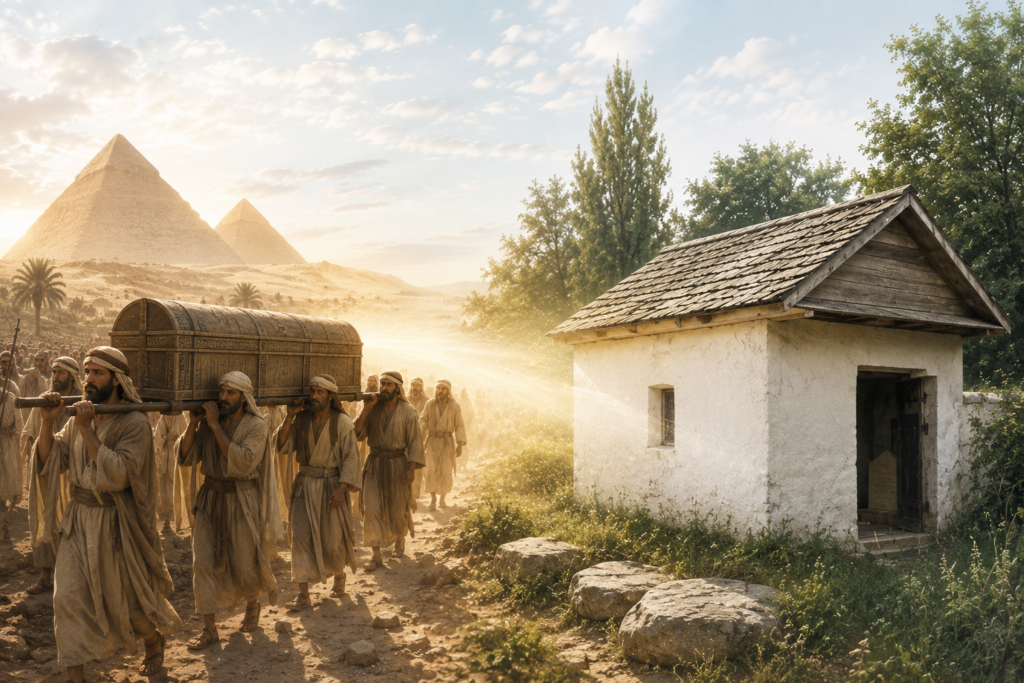
When B'nei Yisrael finally left Egypt, the Torah makes a point of telling us that Moshe Rabbeinu personally took responsibility for Yosef's remains (Shemot 13:19): וַיִּקַּח מֹשֶׁה אֶת־עַצְמוֹת יוֹסֵף עִמּוֹ (And Moshe took the atzamot [bones] of Yosef with him). At first glance, this may seem like little more than the fulfillment of Yosef's final request that his bones be carried out of Egypt when Hashem redeemed His people. R' Avraham Chazan, the son of R' Nachman of Tulchin, the leading talmid of R' Natan, understands the matter much more deeply. In his Biur Ha-Likutim on Likutei Moharan, in the midst of a broader discussion of מַשְׁפִּיעַ [mashpia, giver] and מְקַבֵּל [mekabel, receiver], he explains that Yosef occupied such a necessary position in the process of redemption that Moshe could not simply bypass him. He writes (Ma'amar 11, Peliah 1): לא היה אפשר למשה רבינו עליו השלום [לגאול אותנו] רק על ידי שלקח עמו עצמות יוסף (It was not possible for Moshe Rabbeinu, peace be upon him, to redeem us except by taking Yosef's bones with him).
That statement alone is remarkable, but R' Avraham doesn't leave it in Egypt. He makes the transition to the final redemption with three little words: כן גם עכשיו (So too now). He then writes: כל כח משיח בן דוד לגאולת ישראל יהיה על ידי עצמות משיח בן יוסף ואפרים (All the power of Mashiach ben David to redeem Yisrael will be through the bones of Mashiach ben Yosef and Ephraim). Moshe could not redeem Yisrael without the atzamot of Yosef, and R' Avraham now applies that same dependence to Mashiach ben David and Mashiach ben Yosef. Whatever deeper significance these atzamot may carry, one point is already clear: the final redeemer must receive something from Mashiach ben Yosef. To understand why, we first need to understand who ben Yosef is and what exactly ben David is meant to receive from him.
Explaining the role of Mashiach ben Yosef, R' Avraham answers this question in the very same discussion: למלאות את כולם בדעת ותבונת התורה, ואלקותו יתברך שמו שברזין דרזין המוב״פ [לקו״מ א׳, י״א], שהוא כבר זכה להם, מעוצם ענוותו וביטולו וכלליותו בו יתברך (To fill everyone with da'at and understanding of Torah, and of His G‑dliness, may His Name be blessed, which are in the deepest of the deep mysteries explained there [Likutei Moharan 11], which he had already merited through the intensity of his humility, his bitul, and his inclusion in Him, may He be blessed). So what does Mashiach ben David receive from Mashiach ben Yosef? He receives his da'at. And that da'at is inseparable from the extraordinary humility and complete bitul through which Mashiach ben Yosef attained it.
R' Avraham then explains the inner condition necessary for receiving from this aspect of Yosef. He writes: ועוד יתייחדו ויתקרבו לבחינת יוסף המוב״פ, וזוכים כל אחד להכיר שפלותו ופחיתות מדריגתו עד עפר וארץ ממש, נכללים על ידי זה בתכלית ענוותו שהוא בעוצם גדולתו דייקא (And furthermore, they unite themselves with and draw close to the aspect of Yosef explained there, and each one merits to recognize his own shiflut and the lowliness of his level, unto literal dirt and earth; through this they become included in the ultimate humility of Yosef, which exists precisely in the midst of his tremendous greatness). Although R' Avraham is speaking here more generally of those who receive from Yosef, the principle is important for our discussion: receiving his da'at requires drawing close to his aspect and sharing in the humility and bitul through which that da'at was attained.
We can now understand why Mashiach ben David cannot simply bypass Mashiach ben Yosef. He must receive the necessary da'at from Yosef, and R' Avraham has shown that receiving from Yosef requires connection to his aspect. The next question, therefore, is whether these sources identify R' Nachman with that role.
In Chayei Moharan 6, R' Natan writes: וְלֶעָתִיד יִכְבְּשׁוּ אוֹתָן [עֵשָׂו וְיִשְׁמָעֵאל, הַכּוֹלְלִים אֶת שִׁבְעִים הָאֻמּוֹת] שְׁנֵי מְשִׁיחִין מָשִׁיחַ בֶּן יוֹסֵף וּמָשִׁיחַ בֶּן דָּוִד, וְיֵשׁ צַדִּיק אֶחָד שֶׁהוּא כָּלוּל מִתְּרֵין מְשִׁיחִין יַחְדָּיו (And in the future, the two Mashiachs, Mashiach ben Yosef and Mashiach ben David, will conquer them [Yishmael and Esav, comprising the seventy nations], and there is one tzaddik who is comprised of both Mashiachs together). This establishes the possibility of a single tzaddik containing both messianic aspects, but R' Avraham goes further. He writes in Chochmah u'Tevunah 12: ועיין בחיי״מ בשיחות השייכים להתורות צדיק שהוא כלול מתרין משיחין יחדיו וכפי הנראה ומבואר מדבריו הק׳ בע״פ שאלה הדברים סבבו על רבינו ז״ל בעצמו. ושאעפ״י שנמצא בו גם מנשמת בן דוד הי׳ העיקר מצד משיח בן יוסף (And see Chayei Moharan, in the discussions related to the teachings of a tzaddik who is comprised of both Mashiachs together, and as it appears and is explained from his holy oral words, these matters concerned Rabbeinu himself. And although there was also in him something of the soul of Mashiach ben David, his principal aspect was from Mashiach ben Yosef). This identification changes everything. R' Avraham has already told us that the power of ben David to bring about the final geulah will come through the atzamot of ben Yosef. Now he identifies R' Nachman principally with ben Yosef. The implication is difficult to ignore: if the final redeemer must receive through the atzamot of ben Yosef, we must face the elephant in the room – R' Nachman's tziyun in Uman, Ukraine.
The word עֲצָמוֹת [atzamot] itself deserves a brief pause. Of course, it means "bones" in the literal sense, and in the Torah there is no ambiguity about that. Moshe physically took Yosef's bones with him out of Egypt. And yet, atzamot naturally evokes the word עַצְמוּת [atzmut], meaning the essence or essential substance of something. Yosef's bones are not spiritually neutral remains. They are the physical remains of the very figure whose da'at was necessary for redemption – then as well as now.
So when R' Avraham writes that Mashiach ben David’s redemptive power will come through the atzamot of ben Yosef, we should hear both dimensions at once. The atzamot are his actual bones – just as Moshe physically carried Yosef's remains out of Egypt – but through those atzamot came the atzmut of Yosef, the essential spiritual power and da'at necessary for geulah. And R' Avraham tells us plainly: כן גם עכשיו (So too now). Just as Moshe needed the atzamot of Yosef, Mashiach ben David will need the atzamot of Mashiach ben Yosef in order to receive what is necessary to bring about the final geulah.
At this point, the connection to Uman is no longer merely inferential. In Chochmah u'Tevunah (Siman 1), R' Avraham compares the concealment of Moshe's grave with the concealment of R' Nachman's tziyun. Regarding Moshe, he writes that his grave was hidden so that people would not come there, pray, and thereby bring about the geulah before its appointed time. He then applies the same model to R' Nachman: וכן ציון אדמו"ר ז"ל אף שיודעים מקום קבורתו נסתתר ג"כ מן העולם ע"י גודל המחלוקת כי אך בזה תלוי הגאולה (Likewise, the tziyun of the Admor, of blessed memory, although the place of his burial is known, has nevertheless also been concealed from the world through the magnitude of the machloket, because the geulah depends specifically on this). Those are strong words.
A fuller version of this teaching appears in Chayei Moharan, where the meaning of this concealment is explained more explicitly (Hakdamah, Divrei Ha-Koteiv): וְכֵן קֶבֶר הָאַדְמוֹ"ר זַ"ל נִסְתַּתֵּר גַּם כֵּן מִן הָעוֹלָם עַל יְדֵי גֹּדֶל הַמַּחֲלֹקֶת, אַף שֶׁיּוֹדְעִים מְקוֹם קְבוּרָתוֹ, לְמַעַן לֹא יוּכְלוּ גַּם כֵּן לָבוֹא לְשָׁם לְהִתְפַּלֵּל שָׁם (The grave of the Admor, of blessed memory, was likewise hidden from the world through the magnitude of the machloket, even though the place of his burial is known, so that they likewise would not be able to come there to pray). This makes the meaning of concealment concrete. The machloket does not merely obscure R' Nachman's greatness; it prevents people from coming to his tziyun and praying there, acting as a barrier between them and the very place these sources connect with tikkun and geulah.
The fuller passage also describes coming to his grave as the eternal tikkun of those who merit to do so, for it says: אֲשֶׁר זֶה כָּל תִּקּוּנָם לָנֶצַח (That is their entire eternal tikkun). Perhaps that is why the Introduction concludes with this beautiful tefillah: יְהִי רָצוֹן שֶׁיִּתְגַּלֶּה הָאֱמֶת בָּעוֹלָם וְיִתְפַּרְסֵם קְדוּשָּׁתוֹ בָּעוֹלָם וְאָז תָּבוֹא הַגְּאוּלָה בִּמְהֵרָה בְּיָמֵינוּ אָמֵן (May it be His will that the truth be revealed in the world, that his kedushah become known in the world, and then the geulah will come speedily in our days. Amen).
The picture is now difficult to miss. Mashiach ben David requires the atzamot of Mashiach ben Yosef; R' Nachman is identified principally with ben Yosef; and R' Avraham explicitly connects his tziyun with the geulah. Uman therefore appears in these sources not merely as a place of memory or chassidic devotion, but as part of the structure of geulah itself.
We can now return to the question of Rosh Hashanah itself. In Kochvei Ohr (Anshei Moharan, Diburim mi-Moharanat, 4), we find a remarkable tradition: שָׁמַעְתִּי מֵר' נַחְמָן בֶּן ר' שַׁכְנָא זַ"ל שֶׁשָׁמַע לְעִנְיַן נְסִיעַת רֹאשׁ הַשָּׁנָה וְכוּ', וְהַיּוֹצֵא מִדְבָרָיו הַקְּדוֹשִׁים שֶׁכָּל נְסִיעָה וּנְסִיעָה שֶׁל כָּל אֶחָד וְאֶחָד יִהְיֶה לָהּ חֵלֶק בְּקֵץ הַגְּאוּלָה (I heard from R' Nachman ben R' Shachna, of blessed memory, who had heard concerning the journey for Rosh Hashanah, etc.; and what emerges from his holy words is that every single journey of each and every individual will have a share in the culmination of the geulah). Although this statement does not explain how each journey participates in the redemption, its basic meaning is clear: the journeys to Uman for Rosh Hashanah were understood as having a share in ketz ha-geulah, the culmination of the final redemption.
Immediately afterward, the copyist records another tradition about the gathering itself. After the first night of Rosh Hashanah in Uman, following a particularly lengthy Maariv, it was said: כְּשֶׁאֲנַחְנוּ מִתְקַבְּצִים לְכָאן, בְּוַדַּאי גַּם רַבֵּנוּ זַ"ל אִתָּנוּ פֹּה בְּיַחַד, וּכְשֶׁרַבֵּנוּ זַ"ל פֹּה בְּוַדַּאי כָּל הַשִּׁבְעָה רוֹעִים הֵם גַּם כֵּן אִתָּנוּ פֹּה (When we gather here, certainly Rabbeinu, of blessed memory, is also here together with us; and when Rabbeinu is here, certainly all seven shepherds are also here with us). The speaker then cried out in Yiddish: אִיךְ גְּלֵייבּ אַזוֹי מַמָּשׁ אִיךְ זֶעה זֵיי (I believe it as literally as if I see them). The Rosh Hashanah gathering in Uman was therefore understood not merely as a memorial pilgrimage, but as a living spiritual gathering around Rabbeinu himself.
At this point, it is important to be precise about what these sources do and do not say. R' Avraham never writes, "Mashiach ben David must travel to Uman and stand at R' Nachman's grave." We should not put words into his mouth or present our synthesis as an explicit quotation. But neither should we ignore what he does say. He teaches that Moshe could not redeem Yisrael without Yosef's physical atzamot, and then applies that structure to the final redemption with the words כן גם עכשיו (So too now). He says that the redemptive power of Mashiach ben David will come through the atzamot of Mashiach ben Yosef, identifies R' Nachman principally with Mashiach ben Yosef, and explicitly connects his tziyun with the geulah.
Taken together, these statements form a remarkably coherent pattern. The conclusion we are drawing is not based on one isolated phrase or a fanciful reading imposed from the outside, but on explicit Breslov sources whose individual pieces fit together with unusual precision.
But all of this raises a deeper question. Why Yosef? What does Mashiach ben Yosef possess that Mashiach ben David requires, and why is the Yosef-type tzaddik so often surrounded by intense machloket?
Those questions take us beyond Uman itself. The Rosh Hashanah journey is only one visible point within a much larger chain involving the transmission of da'at, Yisrael, Yosef, David, the two Mashiachs, and ultimately the selling of Yosef. That larger story will have to wait for future issues, b'ezrat Hashem, but it is already clear that Yosef lies at the center of a much deeper redemptive structure.
So why Uman? The answer suggested by these sources is not simply that R' Nachman is buried there. It is that the tzaddik buried there is identified principally with Mashiach ben Yosef, whose role stands at the heart of the Breslov mesorah concerning the final redemption. His atzamot are there, his tziyun is explicitly connected with the geulah, and the Rosh Hashanah journeys to that holy site are described as having a share in ketz ha-geulah.
Moshe Rabbeinu could not redeem Yisrael without Yosef. And when R' Avraham turns from the first redemption to the last, he does not change the pattern. He writes simply: כן גם עכשיו – so too now.