

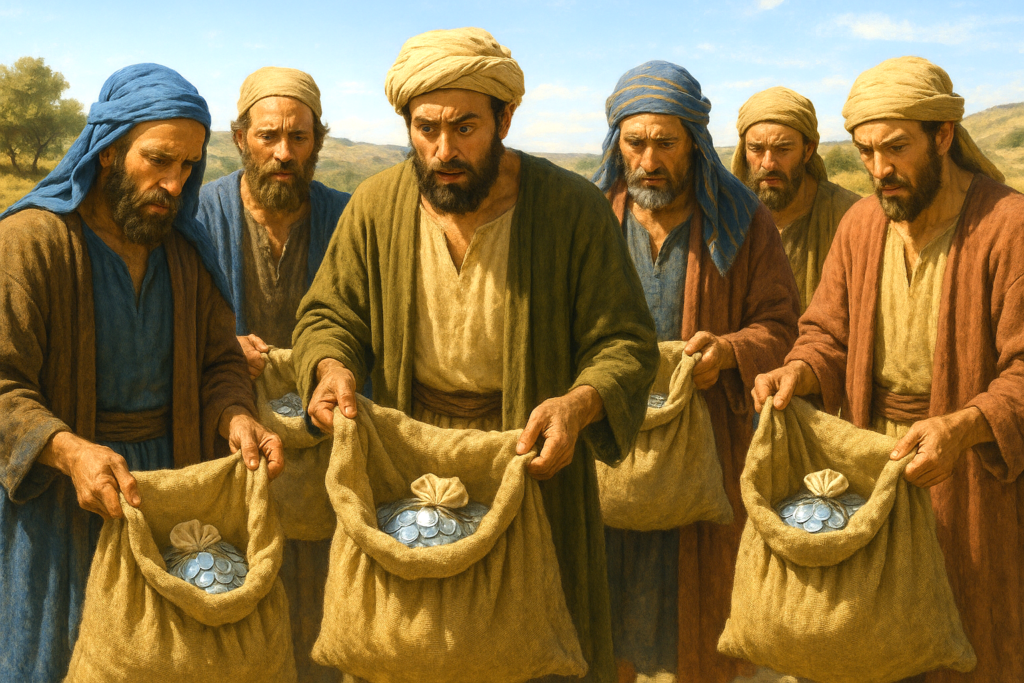
The Secret of the Money Left in Their Sacks
You try hard – really hard. You pour your energy into prayer, begging Hashem to help you conquer a particularly bad middah you just can't shake. You even fast and make resolutions. But nothing seems to work. True, for a little while – maybe a week or a month – you seem to have conquered it. But then, seemingly out of the blue – wham! You fall back into those same old ways. Same reactions, same cravings, same weaknesses.
Most of us know this feeling – and we tend to think we're a failure. But it's not a moral weakness; it's a structural impossibility.
We all have a natural tendency to be self-reliant. And under spiritual pressure, we easily find ourselves saying, 'I can handle it. I'm strong.' On the surface, this sounds admirable, but underneath lies a smouldering fear of admitting dependency. Although very human, this fear is painful – a burden we were never meant to carry alone.
To see how this inner conflict plays out in real life – not in theory, but at the moment of real vulnerability – consider the following case. You or a loved one becomes very ill, chas v'shalom. You cry. You pray. You might even fast. But the sickness deepens. Then one day, someone, maybe not even a friend, comes along and shares with you a particular Gemara that he just 'so happened' to have come across in Daf Yomi (Bava Batra 116a): דָּרַשׁ רַבִּי פִּנְחָס בַּר חָמָא: כֹּל שֶׁיֵּשׁ לוֹ חוֹלֶה בְּתוֹךְ בֵּיתוֹ, יֵלֵךְ אֵצֶל חָכָם וִיבַקֵּשׁ עָלָיו רַחֲמִים – שֶׁנֶּאֱמַר: ״חֲמַת מֶלֶךְ מַלְאֲכֵי מָוֶת, וְאִישׁ חָכָם יְכַפְּרֶנָּה״ (R' Pinchas bar Chama taught, Anyone who has a sick person in his house should go to a Sage and he will request mercy on his behalf, as it says [Mishlei 16:14]: The wrath of the king is messengers of death, but the Sage will secure atonement for it). But certain feelings well up in the person, 'Aren't my prayers good enough?'
The conflict is internal – between self-reliance and submission. Maybe he's not considering the Gemara which says (Yevamot 64a): הַקָּדוֹשׁ בָּרוּךְ הוּא מִתְאַוֶּה לִתְפִלָּתָן שֶׁל צַדִּיקִים (Ha-Kadosh, baruch Hu, desires the prayers of the tzaddikim). Or maybe, he fails to internalize the message in the Torah that Avraham prayed for Avimelech (Bereshit 20:7). Furthermore, if the person is particularly self-reliant, he may even obstruct others from doing what R' Pinchas bar Chama taught. Such a reaction is not intellectual but emotional – which is why it is so difficult to uproot.
R' Nachman calls this inner emotion גַּאֲוָה [ga'avah]. True, in a technical sense, ga'avah means arrogance or haughtiness, but Rabbeinu reveals the engine behind arrogance, what gives it life and sustains it, and that is, spiritual self-reliance (Likutei Moharan 10:4): אֲבָל אֵלּוּ הַבַּעֲלֵי־גַּאֲוָה מְעַכְּבִים תַּאֲוָתוֹ שֶׁל הַשֵּׁם יִתְבָּרַךְ וְאֵינָם מְבַקְשִׁים מִצַּדִּיקִים שֶׁיִּתְפַּלְּלוּ עֲלֵיהֶם כִּי חוֹשְׁבִים שֶׁהִתְעַנּוּ וְסִגְּפוּ אֶת עַצְמָם וּבָזֶה הֵם צַדִּיקִים (However, these self-reliant individuals [ba'alei ga'avah] prevent Hashem, may He be blessed, from having His pleasure, and they don't ask the tzaddikim to pray on their behalf, for they think that their fasts and ascetic self-denials make them tzaddikim).
How come self-reliant avodah doesn't work? R' Nachman explains: כִּי כָּל הַתַּעֲנִיתִים שֶׁהִתְעַנּוּ, אֵין זֶה אֶלָּא כְּמוֹ שַׂק שֶׁיֵּשׁ בּוֹ חוֹרִים הַרְבֵּה, וּכְשֶׁמְּרִיקִים אֶת הַשַּׂק, אַף־עַל־פִּי־כֵן נִשְׁאֲרוּ בּוֹ הַחוֹרִים וְהַגּוּף נִקְרָא שַׂק (For all the fasts with which they afflicted themselves are nothing but a sack that has many holes, and when they empty the sack, even so, the holes remain – and the physical body is called a sack). Rabbeinu compresses several layers of teaching into this one metaphor, and to follow him, we need to tease them apart. First of all, he calls the body a sack – not a vessel or garment – because it carries within it the very desires we struggle to uproot. That's the first problem. Then he adds a second problem: the sack is full of holes – the inborn weaknesses of the physical body that allow those desires to reawaken. So even when a person tries to 'empty' themselves through fasts or self-denial, the desires return. We can pour tremendous effort into emptying our sack, but in the end, the sack itself is the problem. No matter how much work we do, the unrefined impulses return. It's human nature, not failure.
And the first problem – the desire bound inside the sack itself – is exactly what the Torah highlights in Parashat Mikeitz. There, it describes, in strikingly unusual language, the moment when the brothers returned home after their confrontation with the viceroy – Yosef ha-Tzaddik (Bereshit 42:35): וַיְהִי הֵם מְרִיקִים שַׂקֵּיהֶם וְהִנֵּה־אִישׁ צְרוֹר־כַּסְפּוֹ בְּשַׂקּוֹ וַיִּרְאוּ אֶת־צְרֹרוֹת כַּסְפֵּיהֶם הֵמָּה וַאֲבִיהֶם וַיִּירָאוּ (And it came to pass, as they were emptying their sacks, and behold! Each man's bundle of money was in his sack, and they saw their bundles of money, they and their father, and they were afraid). The pasuk doesn't say that they were opening their sacks, but rather they were emptying them. And that's the point. No matter how many fasts or ascetic practices they undertook – all admirable – the kesef [כֶּסֶף, money], representing their kisufim [כִּסּוּפִים, desires, longings], was still bound up inside the sack. Even after 'emptying their sacks,' the root desire was still in the body.
We are left with the unavoidable question: If the sack cannot be emptied through self-effort alone, what can remove what is bound up within it? How can we get rid of this ga'avah, this spiritual self-reliant attitude which is the root of all arrogance and haughtiness?
If this is the diagnosis – that self-effort fails not because it is insincere, but because it is structurally misaligned – then the question is no longer why our avodah collapses, but where true repair can actually begin. R' Nachman answers directly (Likutei Moharan 10:5): וְהָעֵצָה הַיְּעוּצָה לְבַטֵּל הַגַּאֲוָה שֶׁהִיא הָעֲבוֹדָה זָרָה … הָעִקָּר הוּא עַל־יְדֵי הִתְקָרְבוּת לַצַּדִּיקִים (The advised counsel to nullify self-reliance, which is avodah zarah, is essentially through drawing close to the tzaddikim). This works because ga'avah does not reside in the intellect or in physical drives, but in the ruach – the emotional, relational layer of the soul. Therefore, the remedy cannot come through the neshamah, which is too elevated and abstract, nor through the nefesh, which is too coarse and bodily. Any attempt to treat ga'avah from above overshoots the target; any attempt from below never reaches it. The medicine must enter the level of ruach itself. We must draw close to the tzaddikim because the tzaddik is described davka as an aspect of ruach. Describing the appointment of Yehoshua bin Nun, the tzaddik ha-dor who would follow in the footsteps of Moshe Rabbeinu, the Torah says (Bamidbar 27:18): וַיֹּאמֶר יְיָ אֶל־מֹשֶׁה קַח־לְךָ אֶת־יְהוֹשֻׁעַ בִּן־נוּן אִישׁ אֲשֶׁר־רוּחַ בּוֹ וְסָמַכְתָּ אֶת־יָדְךָ עָלָיו (And Hashem said to Moshe, Take for yourself Yehoshua bin Nun, the man who has the ruach in him, and lay your hand upon him).
How can we tell if our drawing close to the tzaddikim is actually 'working' and successfully healing the ga'avah in our hearts? It manifests through our ability to dance and clap our hands with true simchah (Likutei Moharan 10:6): וְזֶה בְּחִינַת רִקּוּדִין וְהַמְחָאַת כַּף כִּי רִקּוּדִין וְהַמְחָאַת כַּף נִמְשָׁכִין מִבְּחִינַת הָרוּחַ שֶׁבַּלֵּב (And this is the aspect of dancing and clapping hands, for dancing and clapping hands is drawn from the aspect of the ruach that is in the heart). Whose ruach is Rabbeinu mentioning here? The tzaddik's ruach. We need his ruach to drive out the haughty attitude of, 'I don't need anyone. I can do this myself.'
Rashi brings this idea from Bereshit Rabbah 70:8 in his commentary on Bereshit 29:1 which describes the manner in which Ya'akov Avinu left Beit-El – וַיִּשָּׂא יַעֲקֹב רַגְלָיו וַיֵּלֶךְ (And Ya'akov lifted his feet and went). Rashi says: נָשָׂא לִבּוֹ אֶת רַגְלָיו (His heart carried his feet). And Rabbeinu explains: עַל־יְדֵי הָרוּחַ שֶׁבַּלֵּב בָּאִים הָרִקּוּדִין (Dancing comes through the ruach that's in the heart). Therefore, when our heart carries our feet in dance, we eliminate the very root of avodah zarah, which is ga'avah itself. And when that happens, Hashem's anger ceases in the world and judgment – din – gets sweetened. As the Sifrei explains (Parashat Re'eh 96): כָּל זְמַן שֶׁעֲבוֹדָה זָרָה בָּעוֹלָם חֲרוֹן־אַף בָּעוֹלָם (As long as there is avodah zarah in the world, there is [Hashem's] burning anger in the world). No avodah zarah – no burning anger.
If dance reveals the healing of the ruach, what about clapping hands? Is that an aspect of ruach as well? R' Nachman explains that clapping is not symbolic but functional. The ruach is where a person's inner responsiveness lives – how a person reacts, yields, resists, or opens – and the hands are where that inner stance becomes actualized. When ga'avah dominates a person's life, the hands grab, control, and manage, but when the ruach is rectified, the hands no longer try to manage reality – they respond to it. This is why clapping builds emunah: faith is not held only in the mind, but expressed through a body that no longer needs to control.
This is why R' Nachman connects clapping to Shir ha-Shirim 5:2: אֲנִי יְשֵׁנָה וְלִבִּי עֵר קוֹל דּוֹדִי דוֹפֵק פִּתְחִי־לִי אֲחֹתִי (I sleep, but my heart is awake – the voice of my beloved knocking, 'Open for me, My sister… '). Although there's an aspect of sleep, the heart begins to wake up. How? Through the knocking – the beat – the movement of ruach. And immediately afterward, we read (Shir ha-Shirim 5:4): דּוֹדִי שָׁלַח יָדוֹ מִן־הַחֹר (My beloved extended his hand through the hole). Rabbeinu explains this as הֶאָרַת הַיָּדַיִם – the illumination of the hands – manifested through clapping. And that is how heresy is eliminated – because emunah is strengthened, which is an aspect of the hands (Shemot 17:12): וַיְהִי יָדָיו אֱמוּנָה עַד־בֹּא הַשָּׁמֶשׁ (And his hands were emunah until the setting of the sun).
We can now appreciate a little of the depth of what Rabbeinu reveals in a single sentence (Likutei Moharan 10:6): נִמְצָא שֶׁעַל־יְדֵי הַצַּדִּיק, הַיְנוּ בְּחִינַת רוּחַ שֶׁבַּלֵּב נִתְגַּלֶּה הֶאָרַת הַיָּדַיִם וְהָרַגְלַיִם, הַיְנוּ בְּחִינַת רִקּוּדִין וְהַמְחָאַת כַּף, וְנִתְבַּטֵּל הַגַּאֲוָה וְהַכְּפִירוֹת, וְנִתְרַבֶּה הָאֱמוּנָה (We find, that through the tzaddik, i.e., the aspect of the ruach that is in the heart, the illumination of the hands and feet are revealed, i.e., the aspect of dancing and hand-clapping, ga'avah – the spirit of spiritual self-reliance – and heresy are nullified, and emunah is increased).
What Rabbeinu offers is not a self-help technique, but a complete spiritual re-orientation. When we stop trying to purify ourselves through our own efforts, and allow the ruach of the tzaddik to heal our own ruach, something loosens inside us. The body begins to move, the hands respond, and emunah is no longer a struggle, but something we live and express – naturally.

3 Responses
IS IT ALSO POSSIBLE THAT AS WE EACH GAIN A NEW LEVEL OF ASCENSION AND ARE THUS IN A WHOLE NEW " FIELD " TO SAY, THE OPPOSING FORCES NOW HAVE TO TRY NEW TRICKS TO GET YOU TO SIN ? THEN YOU FAIL AND FEEL AS IF IT WAS AS IF YOU NEVER ASCENDED AND REACHED A NEWER " UNDERSTANDING ". WHEN IN REALITY YOU ARE ON THE NEW LEVEL AND THUS NEED TO REMAIN ON GUARD FOR THE "OLD TRICK" JUST IN A NEWER DISGUISE ? SORT OF GOING FROM ALGEBRA ONE AND THEN IN YOUR NOW IN ALGEBRA TWO AND YOU FORGET SOME OF THE ASPECTS NEEDED TO ACCOMPLISH THE NEW WORK AS IT IS AT A HIGHER LEVEL ?
JUST SOME THOUGHTS ?
TODAH RABA YEDIN HASHEM
ABSOLUTELY IT'S POSSIBLE TO SAY THAT, BUT WHAT YOU'RE BRINGING UP IS ANOTHER ISSUE, AND ANOTHER TORAH OF RABBEINU'S.
TORAH 10 IS SPECIFICALLY ABOUT HOW TO RID ONESELF OF GA'AVAH, AND THE ONLY WAY TO DO THIS IS THROUGH THE RUACH OF THE TZADDIK — WHICH PRODUCES SIMCHAH IN ONE'S HEART. THIS IS WHY RABBEINU SPECIFICALLY BRINGS UP THE STORY OF THE BROTHERS — BECAUSE THE UNSPOKEN SUBPLOT IS THAT THEY DAVKA REJECTED THE TZADDIK, I.E. YOSEF. SO YOU CAN SEE THE CONNECTION.
BUT YOU'RE QUESTION DEALS WITH SOMETHING ELSE ENTIRELY, WHICH IS ALSO GOOD — WHAT IF SOMEONE IS ALREADY BOUND TO THE TZADDIK AND FEELING LIKE HE'S NOT MAKING PROGRESS. THAT'S A DIFFERENT KETTLE OF FISH, AS THEY SAY. THEN, YES, YOUR EXPLANATION CAN BE VERY TRUE AND IS IMPORTANT FOR PEOPLE TO UNDERSTAND LEST THEY BECOME FILLED WITH DESPAIR. IN PARTICULAR, YOUR QUESTION IS WHAT RABBEINU TALKS ABOUT IN TORAH 6.
TODAH RABA
I JUST READ THIS
" "Only the righteous can show that there is God": Life teaches us little by little that a person is built "with holes, holes, holes, holes, visible and known before Your throne of glory, that if one of them were to open or close, it would be impossible to exist and stand before You for even one hour." When a person reaches the age of 60, a bone in his mouth begins to move and a tendon begins to move. At the age of 60, the leg dries up, the tendon dries up. Up until the age of 60, a person can deceive himself, that he is something, that he is omnipotent, but at this age, he already sees with his senses that he is really nothing, here I fell, here I can no longer walk. But who can open our eyes! And show us when we are healthy, strong and robust that everything is God!! Health is from God! Strength is from God! Everything is from God!! It is only the righteous who is the embodiment of Joseph! Only he can show us that there is God in the world. "
https://www.shuvubanimint.com/2382-2/
TOV SABBATOT YEDIN HASHEM