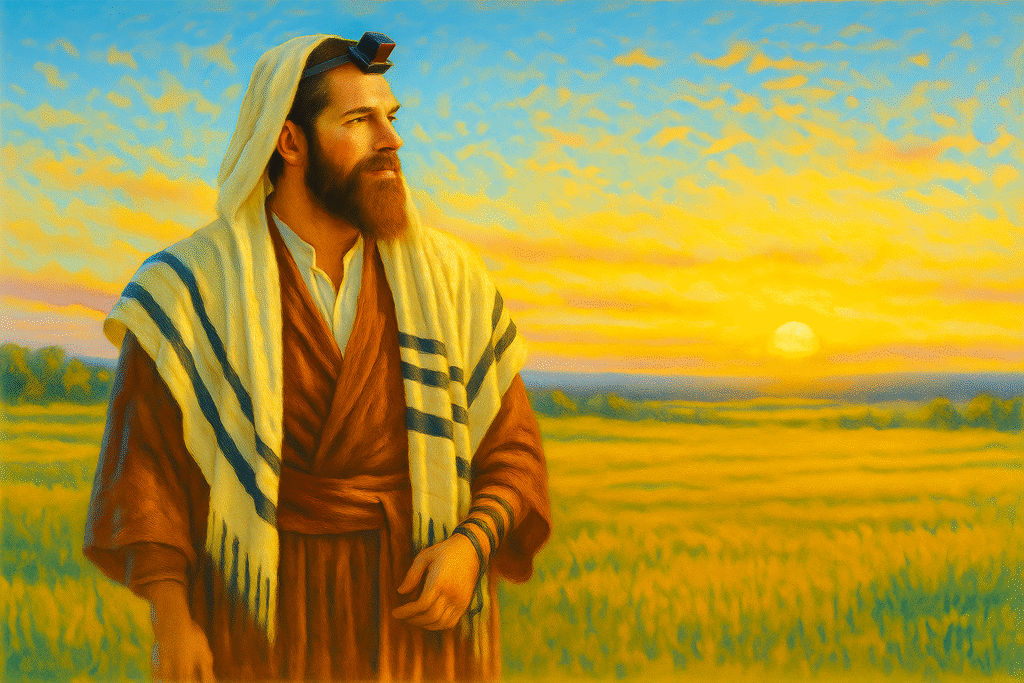
How the Patriarchs Built the Path of Prayer for All Mankind
R' Elazar said (Pesachim 88a): מַאי דִּכְתִיב: וְהָלְכוּ עַמִּים רַבִּים וְאָמְרוּ לְכוּ וְנַעֲלֶה אֶל הַר ה׳ אֶל בֵּית אֱלֹקֵי יַעֲקֹב וְגוֹ׳. אֱלֹקֵי יַעֲקֹב וְלֹא אֱלֹקֵי אַבְרָהָם וְיִצְחָק (What is the meaning of that which is written: 'And many nations shall go and say: Let's go up to the mountain of Hashem, to the House of the G‑d of Ya'akov.' The G‑d of Ya'akov, and not the G‑d of Avraham and Yitzchak?) What is it about Ya'akov that it is only through him that the nations of the world have access to Hashem? The cryptic answer provided by R' Elazar is that Avraham related to Har ha-Bayit as a mountain, Yitzchak related to it as a field, but Ya'akov related to it as a house. How does that response answer the question?
As we will show, this teaching reveals that each Patriarch represents a different level of tefillah: Avraham's mountain – lofty and demanding; Yitzchak's field – open and accessible; and Ya'akov's house – settled and universal. The progression shows how tefillah moves from isolation to inclusion, culminating in Ya'akov through whom even the nations can approach Hashem.
Rashi comments there: הר המוריה ושדה דיצחק ובית אל דיעקב כולם בהר הבית התפללו (The mountain of Moriah, and the field of Yitzchak, and the House of the G-d of Ya'akov – all are on Har ha-Bayit, where they prayed). This provides the key we need to unlock R' Elazar's teaching – we're not just speaking about a geographical location but about tefillah itself.
R' Nachman of Breslov writes in Likutei Moharan 10:3: וְלָעַכּוּ"ם אִי אֶפְשָׁר לָהֶם לֵידַע גְּדֻלָּתוֹ שֶׁל הַקָּדוֹשׁ־בָּרוּךְ־הוּא כִּי אִם עַל־יְדֵי בְּחִינַת יַעֲקֹב […] כִּי הוּא גִּלָּה אֱלֹקוּתוֹ שֶׁל הַקָּדוֹשׁ־בָּרוּךְ־הוּא יוֹתֵר מִשְּׁאָר הָאָבוֹת (It is impossible for the idol worshipers to know about the greatness of Ha-Kadosh, baruch Hu, except through the aspect of Ya'akov […] for he revealed the Divinity of Ha-Kadosh, baruch Hu, more than the other Patriarchs). How so?
To Avraham, at the time of the akeidah, Har ha-Bayit was not just the place of tefillah, but a mountain (Bereshit 22:14): וַיִּקְרָא אַבְרָהָם שֵׁם־הַמָּקוֹם הַהוּא יְיָ יִרְאֶה אֲשֶׁר יֵאָמֵר הַיּוֹם בְּהַר יְיָ יֵרָאֶה (And Avraham called the name of that place 'Hashem Yireh,' as it is said to this day, On the mountain Hashem will be seen). And what is unique about a mountain? Typically, a mountain is out of the way, rocky, and difficult to climb. What does this mean to us? Tzaddikim like Avraham Avinu may be able to access Hashem in tefillah on Har ha-Bayit, but what about the rest of mankind? If even Jews have a difficult time rising to the level of the tzaddikim, how much more so the goyim.
But along comes Yitzchak and teaches us that Har ha-Bayit is really a field. When was Har ha-Bayit a field to Yitzchak? When Rivkah came with Eliezer the servant of Avraham to Eretz Yisrael to wed Yitzchak, the Torah says (Bereshit 24:63): וַיֵּצֵא יִצְחָק לָשׂוּחַ בַּשָּׂדֶה (And Yitzchak went out to converse in the field). And R' Elazar says that this field was, in fact, Har ha-Bayit. Since the plain reading places Yitzchak in the Negev rather than on Har ha-Bayit, some find this teaching difficult to fathom; however, if we read carefully, we can see that R' Elazar's p'shat fits into the pesukim. The Torah tells us that Yitzchak had come up from the Negev heading north, and he eventually came to Har ha-Bayit (Bereshit 24:62-63).
What was he doing there conversing in the field? Who was he talking to? Rashi, citing support from Tehillim 102:1 – וְלִפְנֵי יְיָ יִשְׁפֹּךְ שִׂיחוֹ (and before Hashem, he pours out his conversation) – says that לָשׂוּחַ [lasu'ach], typically translated as conversing or meditating, actually means tefillah. Therefore, we understand that Yitzchak had made a trip from the Negev davka to pray to Hashem – to do hitbodedut – on Har ha-Bayit. And in the words of R' Nachman: וְשָׂדֶה הוּא יוֹתֵר מֻשָּׂג וְנִצְרָךְ לְהָעוֹלָם מֵהַר (And a field is more accessible and more necessary to the world than a mountain). Yitzchak brought the avodah of tefillah to the average person. Whereas a mountain is steep and stony, reached only through great difficulty, a field is level and open, covered with soil and ready for cultivation. Yitzchak taught us that if we want to truly connect to Hashem, we don't have to climb mountains, we just have to walk out into the field and speak to Hashem. The field, however, is still an in-between space – accessible but exposed, open yet impermanent. It invites encounter but not dwelling.
But still, according to R' Elazar, as lofty as Avraham's and Yitzchak's tefillah was, it is not enough to bring all of mankind into a relationship with Hashem. Why not? What's missing?
Ya'akov called Har ha-Bayit itself a house – a bayit (Bereshit 28:19): וַיִּקְרָא אֶת־שֵׁם־הַמָּקוֹם הַהוּא בֵּית־קֵל וְאוּלָם לוּז שֵׁם־הָעִיר לָרִאשֹׁנָה (And he called the name of that place 'Beit-El,' however, Luz was the name of the city at first). But was this also a place of tefillah? Two verses earlier, the Torah says (Bereshit 28:17): וַיִּירָא וַיֹּאמַר מַה־נּוֹרָא הַמָּקוֹם הַזֶּה אֵין זֶה כִּי אִם־בֵּית אֱלֹקִים וְזֶה שַׁעַר הַשָּׁמָיִם (And he was afraid, and he said, 'How awesome is this place! This is none other than the House of G-d, and this is the Gate of Heaven!) So clearly, it was a place of tefillah for Ya'akov. But not just a place of tefillah, but the dwelling place of Hashem and the very gateway that channels tefillah to Heaven.
Avraham perceived it as a mountain and Yitzchak as a field, but only Ya'akov understood its true potential as a house. R' Nachman explains: וְיַעֲקֹב קְרָאוֹ בַּיִת שֶׁהוּא מְקוֹם יִשּׁוּב לִבְנֵי־אָדָם יוֹתֵר מִשָּׂדֶה (And Ya'akov called it a house, for it is a place of settlement for people more than a field). But what's the point? How can a house provide the pathway for even goyim to access Hashem, something that a mountain or a field cannot do?
Yeshayahu ha-Navi prophesied (Yeshayahu 56:7): וַהֲבִיאוֹתִים אֶל־הַר קׇדְשִׁי וְשִׂמַּחְתִּים בְּבֵית תְּפִלָּתִי עוֹלֹתֵיהֶם וְזִבְחֵיהֶם לְרָצוֹן עַל־מִזְבְּחִי כִּי בֵיתִי בֵּית־תְּפִלָּה יִקָּרֵא לְכׇל־הָעַמִּים (And I will bring them to My holy mountain and make them happy in My house of prayer; their burnt offerings and their sacrifices shall be accepted upon My altar, for My house shall be called a house of prayer for all nations). Yes, it's Avraham's mountain, but it is much more than that – because it grew into a house, a true house of tefillah for all peoples, all nations – all of mankind. But what happened to Yitzchak's field? Where did it go? Did it vanish? No, it was transformed – absorbed – into Ya'akov's house. It is the bridge from the starting point to the culmination, but it's still just the bridge. We can now understand why the pasuk speaks of the G-d of Ya'akov. Only Ya'akov transformed tefillah into a house – a form that gathers, contains, and unites everyone – even children and toddlers. Through him, tefillah becomes a shared dwelling, not a private ascent or even an hour of hitbodedut in the field – but a community experience – something the nations of the world can also share in.
Now let's bring this full circle and learn how we may benefit from this understanding in our own lives – today.
Having seen how the Patriarchs built the structure of tefillah from mountain to house, we can ask, What breaks that structure? What unseen forces tear down the house of prayer in our own lives? The Gemara teaches (Pesachim 25a-25b) that three destructive middot prevent prayer from becoming true prayer – avodah zarah, gilui arayot, and sh'fichut damim. These are not only private moral failings but the very cracks that destroyed the first Beit ha-Mikdash, the physical House of Prayer. Clearly, therefore, the rectification of tefillah must involve the rectification of these three terrible sins. And this is exactly what the Patriarchs did – this is how they perfected tefillah in their respective ways.
Avraham rectified the sin of gilui arayot through shemirat ha-brit. After all, he was given brit milah, the mitzvah to guard the holy brit, and R' Nachman explains what gilui arayot is really all about (Likutei Moharan II:1:10): שְׁמִירַת הַבְּרִית – הַיְנוּ מִי שֶׁאֵין שׁוֹמֵר הַבְּרִית כָּרָאוּי (Shemirat ha-brit, i.e. someone who is not shomer ha-brit properly). Therefore, we read about Avraham as he journeyed toward Har ha-Bayit (Bereshit 22:4): בַּיּוֹם הַשְּׁלִישִׁי וַיִּשָּׂא אַבְרָהָם אֶת־עֵינָיו וַיַּרְא אֶת־הַמָּקוֹם מֵרָחֹק (And on the third day, Avraham raised his eyes and he saw the place from afar). This is not just poetic language, but a literal description of the way he conducted himself when he was outside – he kept his eyes down.
Yitzchak rectified the sin of avodah zarah through perfect emunah. In the words of R' Nachman: וַאֲפִילוּ קִלְקוּל הָאֱמוּנָה, שֶׁאֵין הָאֱמוּנָה בִּשְׁלֵמוּת הוּא גַּם כֵּן בְּחִינַת עֲבוֹדָה זָרָה (And even the corruption of emunah, that there is not complete emunah, is also an aspect of avodah zarah). But what does this have to do with Yitzchak? It is as R' Nachman taught further (Likutei Moharan 7:1): וֶאֱמוּנָה הוּא בְּחִינַת תְּפִלָּה (And emunah is an aspect of tefillah). And what does the pasuk say about Yitzchak? As we saw earlier: וַיֵּצֵא יִצְחָק לָשׂוּחַ בַּשָּׂדֶה (And Yitzchak went out to pray in the field). This was the rectification of emunah – of the blemish in avodah zarah.
And Ya'akov rectified the sin of sh'fichut damim through peace and respect for every person. How did Ya'akov perceive Har ha-Bayit? As a house. And people can't dwell together in peace and harmony if they're killing each other. But do we mean literal bloodshed? Not necessarily, for R' Nachman states that the sin of sh'fichut damim, which leads to a blemish in tefillah itself, is much more all-inclusive than just physically murdering someone: שֶׁלֹּא לְבַזּוֹת שׁוּם אָדָם (that one should not disgrace any person).
In summary, if we want to perfect the avodah of tefillah in our own lives, then we need to focus on rectifying the three cardinal sins even as our forefathers did: Avraham on being shomer brit, Yitzchak on having complete emunah, and Ya'akov on not doing or saying anything that might disparage or insult another person. In so doing, we'll reverse the churban and have merit in its rebuilding. And in that merit, may the House of Prayer for all nations soon be rebuilt, and may our own hearts become its living sanctuary.