Learning to See Leah
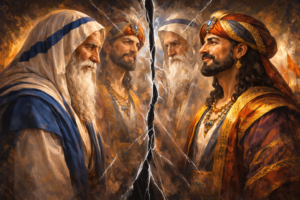
He conquered Lavan and Esav, but the final transformation came only when Ya'akov saw Leah for who she truly was. Becoming Yisrael meant learning to recognize the greatness that had been beside him all along.
Collected Archive of Shoemaker Reports
The Shoemaker Report is Rav Hoshea’s weekly Torah publication. Its focus is on internalizing and living Torah from the heart, not only from the head. The divrei Torah often take the parashah of the week as their point of entry and address central questions of inner avodah — including teshuvah, prayer (tefillah), emunah, bitachon, and related areas of spiritual and personal refinement.
The writing assumes seriousness from the reader and speaks from within Torah life, with meaning emerging organically from honest analysis of our holy Torah and the words of Chazal, rather than from short-lived inspiration or simplified conclusions.

He conquered Lavan and Esav, but the final transformation came only when Ya'akov saw Leah for who she truly was. Becoming Yisrael meant learning to recognize the greatness that had been beside him all along.

Rachel’s silence in Vayeitzei hides one of the Torah’s most painful truths. For seven years she watched Leah receive the love, gifts, and destiny meant for her – and said nothing, choosing compassion over vindication. Her quiet sacrifice reshapes our understanding of the entire parashah.

Why does Hashem lift us only to send us down again? Rebbe Nachman teaches that ascent is just the breath before a descent. Through Parashat Toledot, we see how even our descents—whether struggles or missions—become pathways to deeper light, strength, and true tikkun.

The act of Shem and Yefet covering their father reveals a map of modesty: body, will, and soul aligning to guard the tzelem Elokim. From instinctive awe to conscious mitzvah to divine stillness, the Torah shows how true tzniut radiates holiness from within.

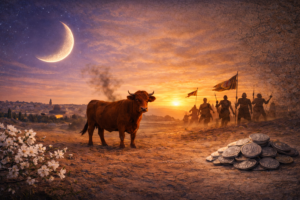
When the moon asked, “Can two kings share one crown?”, Hashem answered, “Go and diminish yourself.” Her cry birthed longing and time itself. Through silence and humility, the soul learns to reflect rather than radiate—healing the ancient wound between giver and receiver.

Our destiny as Israel is not only to keep mitzvot, but to rule over the angels themselves. Rebbe Nachman teaches that this comes by binding to the root of all souls, drawing da’at into the heart, and rebuilding Yerushalayim with true yirah.

Bribes don’t only corrupt courts—they blind our conscience. In Parashat Shoftim the Torah warns: a bribe blinds the eyes of the wise. Self-bribes—flattery, pride, excuses, comfort, pleasure—distort our inner judge. Learn the five subtle bribes that block truth and teshuvah.

Parashat Re’eh calls us to ‘see’—not just with our eyes, but with vision shaped by memory, joy, and contentment. Rebbe Nachman reveals how imagination can distort reality or illuminate truth, guiding us toward blessing, clarity, and spiritual purpose.

The destruction of the Beit ha‑Mikdash left us blind, but the ashes call us to action. At chatzot we join the Shechinah, turning sorrow into splendor and becoming partners in rebuilding Hashem’s House and bringing the light of geulah into our lives.

Hashem commanded a war of vengeance against Midian, led by twelve thousand holy warriors who guarded their eyes with fierce dedication. This essay uncovers the deep connection between shemirat einayim, unholy spiritual forces, and the catastrophic power of androlomusia.

What made Pinchas worthy of the eternal covenant of peace? This deep dive into Parashat Pinchas explores why Moshe couldn't stay, why Korach fell, and how true greatness lies not in rising—but in returning. Discover the mystery of the brit shalom and its relevance for our generation.

What connects the 250 men of Korach, the Tower of Bavel, and S'dom? A startling teaching from the Megaleh Amukot reveals a spiritual lineage of rebellion—souls driven by ambition without submission. Discover how distorted holiness leads to destruction.