Library of Weekly Reports

Divrei Torah Rooted in Breslov Chassidut

Collected Archive of Shoemaker Reports

The Shoemaker Report is Rav Hoshea’s weekly Torah publication. Its focus is on internalizing and living Torah from the heart, not only from the head. The divrei Torah often take the parashah of the week as their point of entry and address central questions of inner avodah — including teshuvahprayer (tefillah)emunah, bitachon, and related areas of spiritual and personal refinement.

The writing assumes seriousness from the reader and speaks from within Torah life, with meaning emerging organically from honest analysis of our holy Torah and the words of Chazal, rather than from short-lived inspiration or simplified conclusions.

From Mountain to House

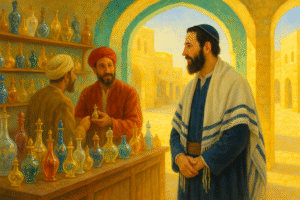
Avraham saw a mountain, Yitzchak a field, but Ya'akov a house—and with it, the secret of universal tefillah. Learn how the Patriarchs built a living pathway to Hashem and why only Ya'akov’s vision turns prayer into a home for all peoples.
Read More →

Speak to the Rock Before Their Eyes

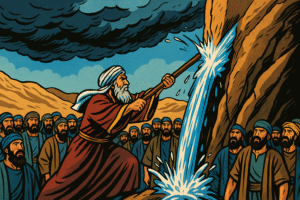
What will bring the final geulah? This deep Torah essay explores Moshe’s test at the rock, Miriam’s well, and the true path to redemption: humble, unified prayer. Learn why only through the collective tefillah of Klal Yisrael can the wellsprings of Torah reopen and Mashiach come.

Read More →

Counting the Omer: Are We Really like the Sotah?

Discover the deep meaning behind the Omer offering of refined barley. Unlike the Sotah's coarse barley, the Omer symbolizes transformative teshuvah through silence, patience, and inner refinement—revealing how true repentance begins with humility and culminates in divine elevation.

Read More →

The Four Pillars of the World

A Deeper Look into the Weeks of Shovavim Shimon ha-Tzaddik, one of the last surviving members of the Anshei Knesset ha-Gedolah – 120 elders of B'nei Yisrael, including a number of prophets, which instituted many of our customary practices in Judaism, such as the wording of the Shemoneh Esreh –

Read More →

A Worm, Drippings of a Honeycomb and Men of Faith

Rosh Hashanah and Breaking the Power of Imagination: Good things come in threes: three patriarchs (Avraham, Yitzchak and Ya'akov), three mochin [spiritual brains] (chochmah, binah and da'at), three kinds of seichel [intellect] (potential, actualized and acquired), three lower aspects of the Jewish soul (nefesh, ruach and neshamah), three 'garments', i.e.

Read More →

A Graceful Ibex and the Healing of the Moon

Having Our Prayers and Requests Accepted: It is taught (Chullin 60b): רבי שמעון בן פזי רמי כתיב "ויעש אלקים את שני המאורות הגדולים" וכתיב "את המאור הגדול…ואת המאור הקטן" אמרה ירח לפני הקב"ה רבש"ע אפשר לשני מלכים שישתמשו בכתר אחד אמר לה לכי ומעטי את עצמך (R' Shimon ben Pazi

Read More →

To Perceive the Inner Dimension of Torah

Making One's Prayers a Delight to Hashem: In Chullin 60b, Rav Asi reconciles an apparent contradiction in the account of creation regarding when the grasses grew from the ground (see Bereshit 1:12 and Bereshit 2:5 for specifics). He answered as follows: שיצאו דשאים ועמדו על פתח קרקע עד שבא אדם

Read More →

Victory Over the Evil Inclination

Yaakov's Encounter with the Ministering Angel of Esav After Yaakov Avinu conducted his family and possessions across the river when returning to what would eventually become known as Eretz Yisrael, we read the following in the Torah (Bereshit 32:25): וַיִּוָּתֵר יַעֲקֹב לְבַדּוֹ וַיֵּאָבֵק אִישׁ עִמּוֹ עַד עֲלוֹת הַשָּׁחַר (And Yaakov

Read More →

Men May be Created Equal, but Angels are Not

Likutei Moharan 20 and Swords of Iron After Yaakov Avinu left Lavan, he went, as the expression goes, from the frying pan into the fire. His destiny was to come face to face with his brother Esav. Knowing that this was his destiny, he sent messengers to Esav (Bereshit 32:4):

Read More →

The Three Hands of Hashem

A number of months ago, a friend of mine asked me why some people (such as 'yours truly') clap from time to time during davening, even during Shemoneh Esreh itself. At the time, I didn't give him much of an answer as I was caught off guard and didn't have

Read More →

What's My Money Got To Do With It?

We discovered from our last article entitled Learning to Shoot Straight that perfect, whole tefillah is acquired through personal purity and tzedakah, i.e. the giving of charity.Therefore, if we want to remove the impediments that inhibit or limit our tefillot, we should learn how to purify ourselves and how to

Read More →

Learning to Shoot Straight

In last week’s article, we explained how tefillah [תפילה, prayer] is Mashiach’s fundamental weapon for defeating the forces of the Sitra Achra. By extension, we learned that this is also the weapon that each and every one of us must use to defeat the forces of evil in our lives.

Read More →