Library of Weekly Reports

Divrei Torah Rooted in Breslov Chassidut

Collected Archive of Shoemaker Reports

The Shoemaker Report is Rav Hoshea’s weekly Torah publication. Its focus is on internalizing and living Torah from the heart, not only from the head. The divrei Torah often take the parashah of the week as their point of entry and address central questions of inner avodah — including teshuvahprayer (tefillah)emunah, bitachon, and related areas of spiritual and personal refinement.

The writing assumes seriousness from the reader and speaks from within Torah life, with meaning emerging organically from honest analysis of our holy Torah and the words of Chazal, rather than from short-lived inspiration or simplified conclusions.

Sanctifying the Small Light Within

In the four special parashiot of Adar – Shekalim, Zachor, Parah, and ha-Chodesh – R’ Natan reveals a single spiritual arc: from uncovering hidden good, to breaking despair, to judging oneself favorably, and finally to renewal. The path from Amalek to rebirth begins with a small point of light.

Read More →

Taking Torah in the Age of the Internet

In Parashat Terumah, “וְיִקְחוּ־לִי” reveals that Torah is not information but hamshachah – drawing the Shechinah into the mind. Based on Likutei Moharan, Tinyana 60, this essay explores chiddushei Torah in the age of the internet: how online Torah can elevate a prepared vessel – or entrap an unready one – and why both teacher and listener must serve as the filter.

Read More →

Don't Read Life as Walking – Read It as Standing

At the end of Shas (Niddah 73a), Chazal overturn how we read life: not halichah – constant striving and movement – but halachah – structure, inner standing, and already-lived meaning. A ben Olam ha-Ba is not promised a future reward, but embodies Olam ha-Ba now through humility, completion, and a life that can stand on its own.

Read More →

When History Holds Its Breath

There are moments when history seems to hold its breath. Redemption unfolds in two stages – leaving and entering. The space between them is unstable, but not broken. That instability is called ra‘ad: the tremor that appears when inner truth begins to rule outer life.

Read More →

Tefillin and the Elevation of Yirah

In Parashat Bo, the mitzvah of tefillin reveals a deep map of inner avodah. Drawing on Likutei Moharan 15, this essay explores how fallen fear (yirah) is elevated through self-judgment and humility into da’at, transforming fear into awe and opening the path to the hidden light of the Torah.

Read More →

The Death of Memory

Galut does not begin with hatred or cruelty. It begins when memory dies. This report traces Egypt’s exile not to oppression, but to a deliberate forgetting of Yosef – showing how societies collapse when contribution no longer creates obligation, and consumption replaces covenant.

Read More →

Freeing the Captives

Fear disqualifies a man from battle—not only fear of swords, says R’ Akiva, but even fear of one’s own sins, says R’ Yosi ha-G’lili. The Torah hints that true war is spiritual: rescuing sparks of holiness from captivity, where the Shechinah itself waits for release.

Read More →

Speak to the Rock Before Their Eyes

What will bring the final geulah? This deep Torah essay explores Moshe’s test at the rock, Miriam’s well, and the true path to redemption: humble, unified prayer. Learn why only through the collective tefillah of Klal Yisrael can the wellsprings of Torah reopen and Mashiach come.

Read More →

Removing the Spirit of Jealousy

Hashem values shalom so deeply that He allows His name to be erased from a sefer — nullifying His own reputation in the world — to restore peace between husband and wife in the case of suspected adultery. Similarly, tzaddikim sometimes burn their own holy sefarim. What holy purpose are they achieving by this act?

Read More →

Shavuot: Entering into Hashem's Simchah

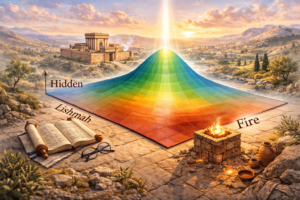
Experience the inner joy of doing mitzvot with pure intention—lishmah. Drawing upon teachings from Rebbe Nachman and Likutei Halachot, rhis powerful Torah insight explores how true simchah connects us to na’aseh v’nishma, uplifts the soul, and reveals the deeper light of Shavuot and Matan Torah.

Read More →

And To Visit His Palace

Parashat Terumah delves into the significance of the contributions to the Mishkan. Explore the spiritual lessons behind Hashem's command to "take" a terumah and how giving with a generous heart brings us closer to divine wisdom and understanding.

Read More →

Like One Man With One Heart

How to Fulfill the Mitzvah of 'You Shall Love Your Fellow as Yourself' Commenting on the fact that Shemot 19:2 describes Am Yisrael using the plural וַיַּחֲנוּ (and they encamped) and then just two words later describes it using the singular וַיִּחַן (and it encamped), Rashi famously writes that they

Read More →